
 By Alexandra Harper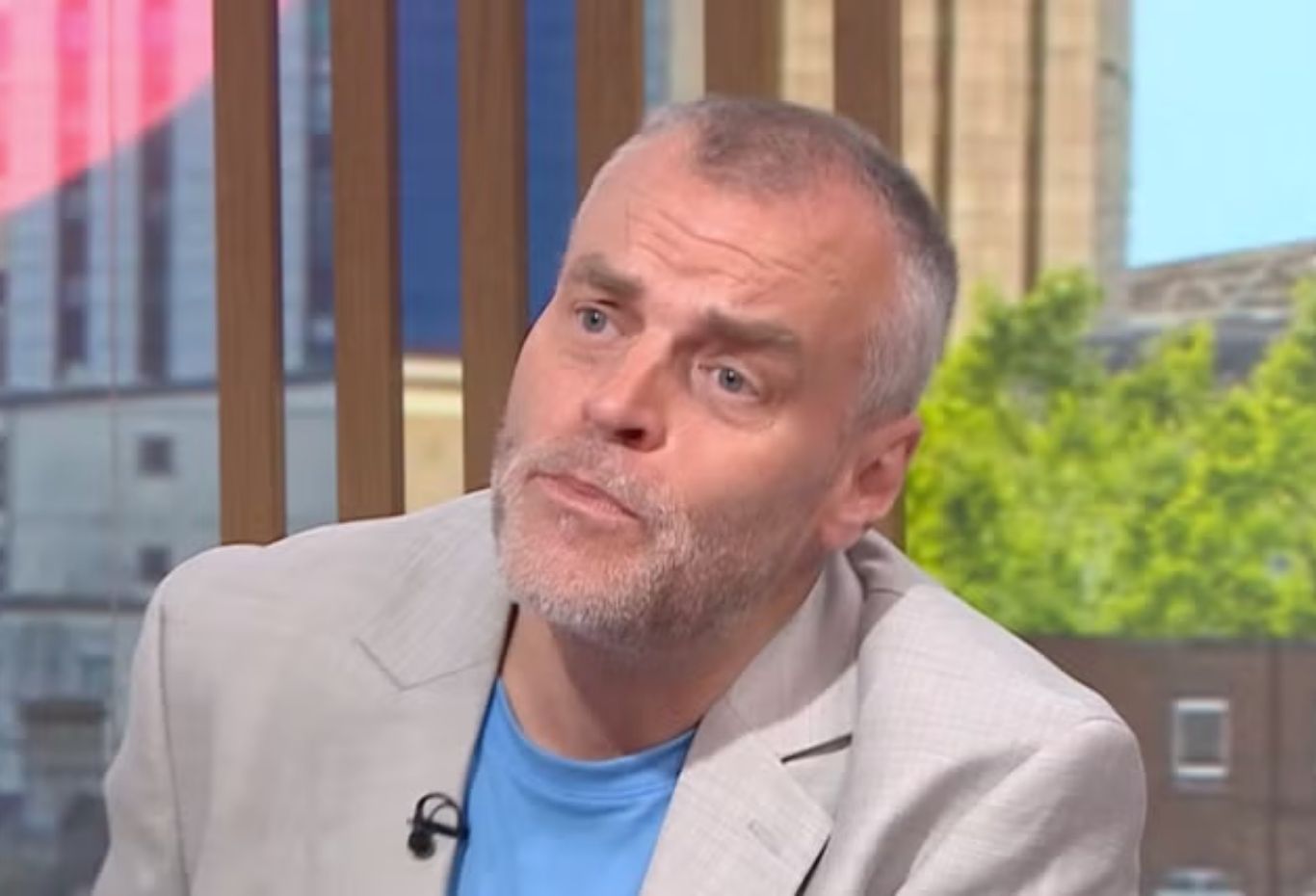
In political circles, the name Tim Montgomerie arouses a mixture of respect, interest, and conflict. Montgomerie has long been a leading voice in British conservatism, known for his astute political commentary, influential site ConservativeHome, and shifting ideological stances.
However, a distinct kind of online curiosity has emerged in recent years: searches for “Tim Montgomerie health problems.” A portion of this attention stems from sincere worries, while a portion stems from false information that is magnified by social media’s echo chamber.
By providing a thorough, fact-based biography of Tim Montgomerie that discusses what is known about his health—particularly his candid discussion of mental health issues—without conjecture or embellishment, this page seeks to distinguish fact from rumour.
Early Years and Experience
Tim Montgomerie was born into a military family in Barnstaple, Devon, on July 24, 1970. His upbringing was characterised by the mobility and discipline typical of Army households, which would subsequently impact his political identity and feeling of civic obligation.
Before attending the University of Exeter to study geography and economics, he attended local schools. He started forming his worldview at Exeter on conservative ideals, Christianity, and social responsibility. He was intelligent, well-spoken, and passionate about both political theory and moral philosophy, according to friends and academics.
Early Engagement in Politics
Montgomerie’s involvement with conservative youth groups during his time in college marked the beginning of his political career. He co-founded the Conservative Christian Fellowship (CCF) in the early 1990s with the goal of incorporating religious values into Conservative Party politics since he was much influenced by Christian ethics.
Montgomerie was positioned as a link between the party’s new social justice wing and traditional moral conservatism thanks to this early endeavour. His latter career would continue to vacillate between both extremes, fusing economic realism with policy advocacy centred on compassion.
Establishing ConservativeHome: Creating the Contemporary Right
ConservativeHome.com, a ground-breaking website that allowed grassroots conservatives a voice outside of the official party channels, was founded by Tim Montgomerie in 2005. Online political commentary was still in its infancy at the time, but Montgomerie’s blog swiftly rose to prominence as one of the most significant in British politics.
He contributed analysis, polling, and commentary through ConservativeHome that influenced conversations at the party’s highest levels. He gained respect and even caused conflict at Westminster for his willingness to criticise Conservative leadership while upholding the party’s fundamental values.
Long before social media became popular, Montgomerie contributed to modernising the Conservative Party’s online presence by elevating local voices and holding party leaders responsible.
The Center for Policy Advocacy and Social Justice
Montgomerie and Iain Duncan Smith co-founded the Centre for Social Justice (CSJ) concurrently. The think tank concentrated on addressing issues that were frequently disregarded by conventional right-wing politics at the time, such as poverty, addiction, family dissolution, and welfare reform.
His work at CSJ demonstrated his conviction that conservatism should actively support marginalised people in addition to upholding law and order. His defining strategy was striking a balance between practical policy and moral conviction.
Career in Journalism and Commentary
Montgomerie’s increasing prominence brought him national media positions. In 2013, he became a comment editor at The Times, confirming his status as a prominent conservative scholar. His essays, which advocated for honesty about inequality, integrity in politics, and a return to grounded, faith-informed conservatism, frequently combined empathy with criticism.
Later, he featured frequently on British television, including BBC News, GB News, and Sky News, and wrote for other significant publications. He spoke to a wider audience through his media work, covering subjects including Western decline, Brexit, and British social ideals.
The Human Aspect of Politics and Mental Health
One of Montgomerie’s most significant and intimate contributions to the numerous public debates surrounding him is his candour on mental health.
Montgomerie openly discussed his battles with depression and the impact isolation had on his sense of purpose in interviews conducted after the COVID-19 lockdowns. He utilised his position to normalise open discussion about mental health, in contrast to many public personalities who conceal their weakness, particularly among males in politics and the media, where stoicism is sometimes confused with strength.
Many people respected this public admission. Many people who followed Montgomerie for political rather than personal comments found resonance in his emphasis that admitting mental health issues is an act of integrity rather than a sign of weakness.
He contributed to humanising a political culture that was frequently characterised by hostility and ego by bringing this subject into the light. He was brave and approachable since his experience was similar to that of innumerable others who found confinement emotionally taxing.
Explaining the Rumours: What Is Actually Known About His Health
In recent years, “Tim Montgomerie’s health problems” have been the subject of conjecture in a number of online forums. His talk of mental health was confused with clinical diagnoses in some posts, while others implied a significant physical ailment.
To be clear:
Tim Montgomerie does not appear to be suffering from any major or persistent physical illness.
His open admission of mental health issues, especially anxiety and despair associated with the pandemic years, is the only information that is currently available based on his own public remarks. No chronic illness, disability, or physical condition has been made public by him.
Misinformation typically results from a number of predictable factors:
- Visual speculation: The way public personalities seem on video is frequently examined. Unfounded presumptions regarding one’s health can be easily triggered by a weary appearance or slower speaking.
- Echo chambers: When a rumour spreads online, even if it hasn’t been proven, other websites who want to obtain clicks copy it.
- Name confusion: Some users confuse “Tim Montgomery,” the American sprinter implicated in a doping scandal, with “Tim Montgomerie,” the UK commentator. This introduces yet another layer of false information.
- Mental health stigma: Discussions about mental health in public discourse are occasionally misinterpreted as indicators of more serious illness.
Montgomerie’s candour about his despair was actually a brave act rather than a sign of deterioration.
Public Burnout and Work-Life Balance
Montgomerie has worked in a variety of stressful and burnout-prone sectors, including journalism, politics, and activism. Even the most resilient public figures can be worn down by the 24-hour news cycle, ongoing political unrest, and social media criticism.
His readiness to take a step back, reevaluate, and talk about his mental health is consistent with a larger trend of well-known political figures recognising the need for healing and balance.
He has discussed the significance of community, faith, and relaxation as the cornerstones of personal stability. His thoughts on mental health show maturity rather than fragility—a realisation that long-term political participation necessitates emotional fortitude.
Personal convictions and political realignment
Tim Montgomerie gained notoriety in 2024 when he openly defected from the Conservative Party and joined Reform UK. Given his strong ties to Conservative politics, many were taken aback by the decision.
Montgomerie clarified that his choice was motivated by his conviction that the Conservative Party had deviated from its core principles by failing to provide socioeconomic stability, national integrity, and cultural revitalisation. He believed that Reform UK offered a more genuine avenue for national discourse and political change.
As is typically the case with significant political changes, his departure also rekindled rumours about his health. His realignment may have been due to “health reasons,” according to certain internet rumours, although there is no evidence to support these assertions. It was obvious that his action was ideological rather than medical.
Individual Life and Religion
Tim Montgomerie’s worldview has always revolved around faith. He has frequently discussed the moral implications of politics and the significance of forgiveness, humility, and compassion in leadership as a devout Christian.
He has mentioned his spiritual practices and belief in community as crucial supports throughout trying times, particularly his mental health difficulties, even though he keeps his private life largely quiet.
In an interview, he once stated that “faith keeps me anchored when everything else is uncertain,” which sums up his fortitude and outlook on life’s obstacles.
Legacy and Public Reception
Reactions to Montgomerie’s career have been conflicting. His independence, honesty, and intelligence have won him admirers. He is perceived by critics as erratic, occasionally shifting ideologies more quickly than his audience can keep up. However, even his critics admit that he is still one of the most important conservative intellectuals in Britain.
His emphasis on cultural identification, moral rejuvenation, and truthful journalism has struck a chord with audiences fed up with divisiveness and superficial political commentary in recent years.
He has expanded his impact beyond politics by speaking out about mental health and demonstrating that vulnerability and leadership are compatible.
Privacy and Public Responsibility
Although it’s normal to be curious in public figures, it’s also critical to understand boundaries. Physical and mental well-being are quite personal. Both audiences and the media have an ethical obligation to explore such issues only in a respectful and context-checked manner.
The facts in Montgomerie’s case are straightforward:
- He has discussed his issues with mental health.
- He hasn’t mentioned any significant medical conditions.
- Online speculative claims don’t have reliable sources.
It is our responsibility as citizens and readers to treat such subjects with compassion and moderation.
Present Projects and Prospects
Tim Montgomerie is still involved in politics as of 2025 through podcasts, interviews, and criticism. He continues to be a unique voice in British media, not hesitant to question conventional wisdom on both the left and the right.
He has gained respect from people of all ideologies due to his moral seriousness and intellectual curiosity. He addresses every subject with the complexity of someone who has experienced both success and hardship, whether it is culture, policy, or personal religion.
Montgomerie has stressed the value of honesty, humility, and rejuvenation in political life in his most recent appearances—a message that strikes a chord in a time of pessimism.
His openness to talk openly about mental health has, if anything, increased his credibility and served as a reminder to viewers that sincerity is still an important and uncommon quality in public debate.
The Story’s Greater Significance
Tim Montgomerie’s story illustrates a broader reality about contemporary culture. Public personalities are frequently reduced to rumours, memes, and headlines, but behind every name is a person dealing with the same issues as everyone else.
In a society that is frequently characterised by pretence, Montgomerie’s admission of his mental health journey elevated him above the status of political pundit and made him a figure of honesty and resiliency.
His experience inspires other professionals to reject the stigma associated with mental illness and to take their well-being seriously, particularly in high-stress professions.
In conclusion
According to the public record, Tim Montgomerie’s health issues are related to his mental health issues during the epidemic, which he has bravely talked about. Beyond that, there is no confirmed information indicating a persistent medical problem or a major physical sickness.
To characterise him based solely on rumours would be to overlook the much more compelling tale of a morally upright writer, thinker, and devout man who is still developing both in public and privately.
His life story is one of perseverance rather than weakness; it is the tale of a man who used his platform to promote sincere dialogue about politics, culture, and the human condition, gained influence via conviction, and honestly faced personal setbacks.
Montgomerie’s example serves as a reminder that, despite the abundance of false information in the digital age, a public figure’s most potent tools are still honesty, integrity, and vulnerability.