
 By Alexandra Harper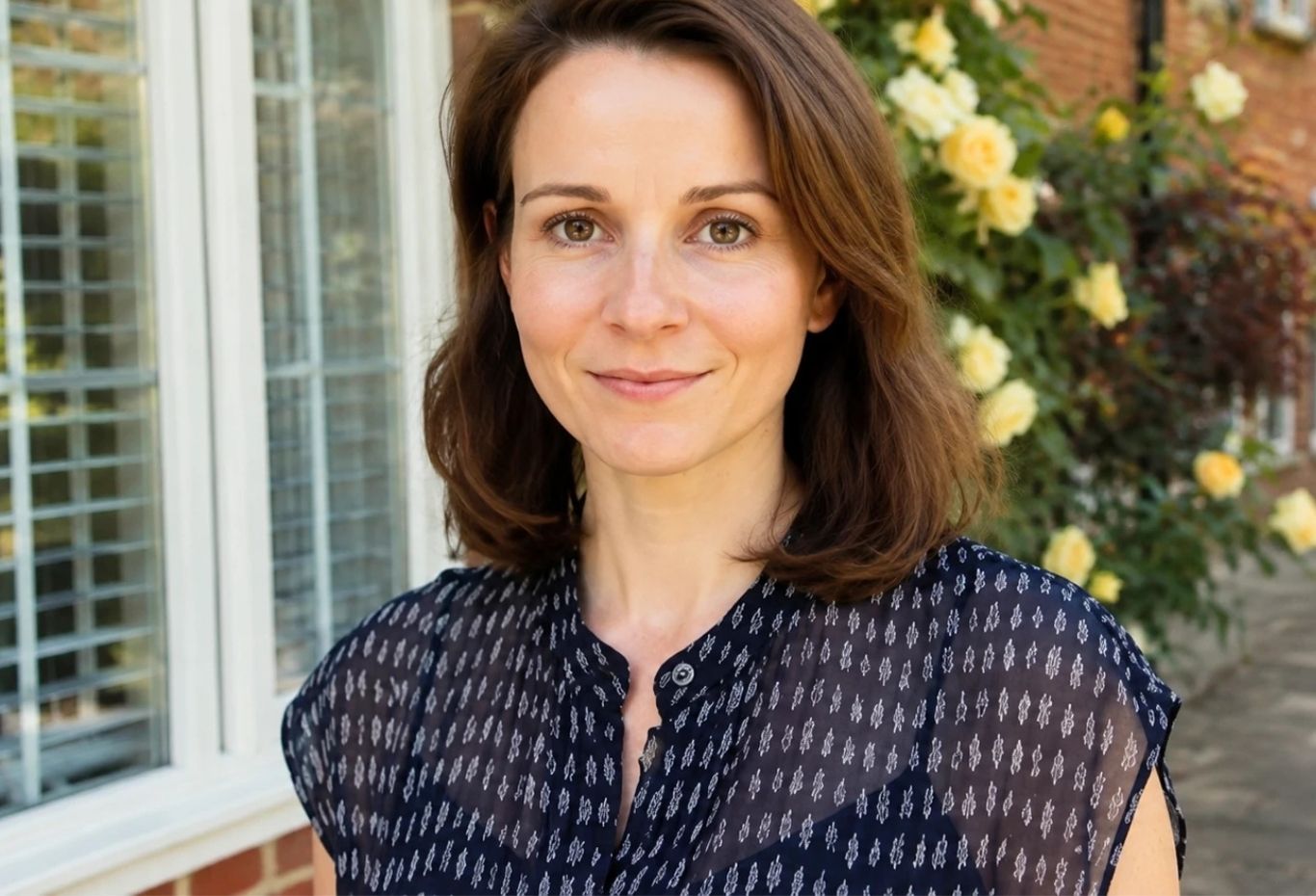
The British journalist and political analyst Annabel Denham is best recognised for her work at the intersection of media debate, public policy, free-market economics, and Westminster politics. The Telegraph, where she has been linked to political commentary and opinion writing, or radio and television appearances where she discusses the day’s political stories are the most common ways that readers come across her. Her public profile is based on a consistent track record of writing, editing, and debating Britain’s future rather than celebrity exposure or personal spectacle.
She is therefore a different type of public personality. Denham’s work belongs in the political discourse even though she is not a politician. Despite not being a traditional news reporter in the strict sense, she influences readers’ perceptions of political parties, leaders, organisations, and policy decisions. The easiest way to tell her story is to look at the professional worlds she has worked in, such as business journalism, entrepreneurship policy, free-market think tanks, national newspaper commentary, and parliament.
Denham has a solid public record in his professional life but a far weaker one in his personal life. This is significant since searches for her name frequently include information about her age, family, husband, income, and financial worth, all of which have not been independently verified. Silence shouldn’t be transformed into conjecture by a fair profile. It is safe to say that Annabel Denham has established herself as a prominent figure in British right-of-center criticism. Her career has been influenced by her views on public spending, enterprise, state authority, and political accountability.
Childhood and Family History
A large portion of Annabel Denham’s early life has been kept out of the public eye. A verified date of birth, hometown, parents’ names, or a thorough family history are not included in trustworthy public profiles. For British journalists, particularly those whose public function is professional rather than celebrity-driven, this privacy is not unusual. It does mean that instead of using online speculation to fill in the blanks, proper writing about her life must start with what is known.
It is evident that schooling, employment, and commentary have contributed significantly to the development of Denham’s public persona. She hasn’t portrayed herself as a family-oriented public figure or lifestyle star. Politics, economics, policy, and public discourse are typically the subjects of her speeches and writings. Her arguments have received more attention than her personal life thanks to this professional concentration.
Readers seeking a comprehensive personal biography may become frustrated by this absence of verified private information. However, it also reveals something about Denham’s chosen public persona. She is well-known enough to be acknowledged in political media, yet she is cautious enough to keep her private life out of the public eye. That barrier makes sense and is practical for a pundit who writes on national decisions and institutions.
Learning and Intellectual Development
Denham’s educational background is typically associated with SOAS University of London and the University of Manchester. Her degree in French and History from Manchester and her doctoral studies in International Studies at SOAS have been linked to her through public professional listings. These subjects were a perfect fit for the subsequent career. They include foreign affairs, politics, culture, history, and language—all of which are beneficial for a writer engaged in public discourse.
A commentator gains a feeling of continuity and consequence from history. It teaches a writer to consider how institutions, leaders, and societal customs evolve throughout time rather than only focusing on the current political dispute. An additional perspective is provided by French and international studies, which promote focus on Europe, statecraft, and political culture outside of Britain. Even when Denham is concentrating on domestic conflicts, her later writing frequently reflects that broader perspective.
She did not pursue an academic career as a result of her studies. Rather, it seems to have helped her get ready for the real world of journalism and policy. She chose to focus on argumentation, editing, communication, and public persuasion rather than detached scholarship. Her professional persona would revolve upon that combination.
Initial Movements in Westminster
One of Denham’s first well-known positions was as a researcher for Lord Peter Lilley in Parliament. Former Conservative cabinet minister Lilley held important positions in the government under John Major before becoming a member of the House of Lords. Although a legislative research position is rarely attractive, it can serve as a valuable training ground. It teaches how political arguments are prepared, how policies are developed, and how Westminster operates internally.
That kind of experience is important for a prospective pundit. It reduces politics from an abstract concept to documents, meetings, briefings, speeches, amendments, and deadlines. The habits of party politics—loyalty, dispute, messaging, compromise, and the discrepancy between public and private strategy—are also introduced to a new researcher. Denham frequently expresses interest in those tensions in his later writing.
In a way that reading about it cannot, working around Parliament also puts one in intimate proximity to the Conservative tradition. Although Denham’s subsequent career would pass via centre-right and free-market organisations, Westminster provided her with an early understanding of political power. Writing that the government ought to be more disciplined, sharper, or smaller is one thing. Observing the machines up close is another.
City A.M. and the Years of Business Journalism
Later, Denham entered the field of business journalism, working for the London newspaper City A.M., which covered business, policy, markets, and finance. She has held positions pertaining to business features and entrepreneurship. Because it linked politics to the real-world issues of businesses, investors, start-ups, employees, and employers, this was a crucial period in her career. She transitioned from research to public-facing journalism and editing as a result.
Compared to pure political reporting, business journalism has distinct questions. It examines the effects of tax changes on firms, the impact of regulations on expansion, and the reasons why entrepreneurs find it difficult to establish and grow their enterprises. Additionally, it makes authors consider readers who are more interested in expenses, confidence, and potential than in Westminster drama. The economic instincts seen in Denham’s subsequent criticism were shaped in part by this background.
Denham’s employment at City A.M. put her in close proximity to the issues facing the corporate community in Britain. Readers of the paper include those who keep a close eye on the City of London, markets, and policy choices. Writing for a readership that demands clarity on money, growth, risk, and governmental decisions was necessary. Even when the immediate topic is popular culture or party politics, Denham frequently revisits those issues in his later writings.
The Female Founders Forum and Entrepreneurs Network
Denham’s work with The Entrepreneurs Network was a significant portion of her career prior to The Telegraph. There, she held a senior position and participated in the Female Founders Forum, an effort that addressed the obstacles faced by female entrepreneurs while starting enterprises. This time frame is significant because it demonstrates Denham’s involvement in policy research, advocacy, events, and communications in addition to his work as a writer. It introduced her to the realm of enterprise policy and start-ups.
The Female Founders Forum looked at topics like growth, networks, confidence, access to capital, and the disparity between companies run by men and women. Denham’s work in that field demonstrated an interest in women’s economic engagement, though not always in the terminology that advocacy organisations frequently employ. She frequently framed the problem in terms of ambition, growth, opportunity, and practical reform. That strategy aligns with her broader free-market perspective.
Although it’s simple to ignore, this phase of her career is among the most illuminating. It demonstrates that Denham’s public objectives extended beyond media opinion and party politics. She worked in the policy field for years, considering how people launch businesses, how obstacles function, and how the government may support or impede entrepreneurship. In light of this, her later writings on productivity, welfare, labour, and regulation make more sense.
Becoming a member of the Institute of Economic Affairs
Denham became the Director of Communications at the Institute of Economic Affairs in 2020. One of the most well-known free-market think tanks in Britain, the IEA has long promoted deregulation, reduced taxes, limited government, and market-led reform. Denham found himself in the midst of a contentious ideological argument when he accepted a top communications position there. As Britain entered the Covid-19 era, public health powers, borrowing, furloughs, lockdowns, and state involvement were everyday political issues.
The function had unique significance because of the timing. A think tank’s communications director does more than just distribute press releases. Developing public arguments, responding to major events, placing spokespersons in the media, and influencing how research is portrayed are all part of the role. It calls for quick thinking, discernment, and an understanding of how policy concepts are received by reporters and viewers. That setting probably contributed to Denham’s eventual ease on TV panels.
Her affiliation with free-market politics was further reinforced by the IEA position. For her supporters, this means that she contributes economic seriousness and intellectual coherence to public discourse. Her affiliation with an intellectual network that is excessively suspicious of government involvement is perceived by her detractors. In any case, the relationship is essential to comprehending her public image. Denham’s work is inextricably linked to the larger debate about the type of economy and level of government that Britain desires.
The Transition to the Telegraph
Denham gained a wider national audience by entering The Telegraph’s comment sections. One of the most important newspapers in Britain, especially for conservative and centre-right readers, is The Telegraph. Politicians, advisors, activists, business executives, and politically active subscribers keep a careful eye on its opinion pages. It was a logical yet crucial move for a writer with Denham’s experience.
Denham has been involved in opinion editing and political commentary at The Telegraph. She has been described in the public eye as a columnist or senior political analyst, as well as in senior comment jobs. Although these positions are not the same, when combined they demonstrate editorial influence and a prominent public byline. She has contributed to the machinery that determines how opinion pages communicate with readers in addition to writing arguments.
In British politics, a job like this is significant. Comments on the direction of the Conservative Party, immigration, welfare, taxes, leadership, or culture are particularly likely to make their way through Westminster. Denham’s writing is a part of the ecosystem. It appeals to readers who want not only facts but also an analysis of what political developments indicate about the more fundamental issues facing Britain.
The Topics of Annabel Denham’s Writing
British politics, economy, public spending, welfare, universities, immigration, party identity, and the state of national institutions are frequently the subjects of Denham’s comments. She writes from a very right-of-center viewpoint, frequently criticising political leaders who, in her opinion, avoid difficult decisions and distrustful of an expanding state. Politics is often treated in her writing as a litmus test. In addition to who gains power, the question is whether or not they are prepared to face failure.
Compared to neutral analysis, this lends her work a stronger edge. Incentives, reliance, institutional weakness, cultural drift, and the discrepancy between public experience and political pledges are topics that frequently pique her interest. Her writings have explored the welfare bill, universities, the significance of British values, Reform UK’s ascent, the future of the Conservative Party, and Labour’s governing challenges. These topics put her squarely in the discussions that are redefining British politics in the wake of Brexit, austerity, COVID, and the cost-of-living crisis.
The public’s trust and the state’s capacity are at issue. Denham frequently writes as though Britain has grown too accustomed to institutional failure, decline, and excuses. That prognosis has relevance in the current political environment, whether or not readers agree with it. It explains why more people than only Telegraph readers are interested in her work.
Broadcast Presence and Public Image
Broadcast appearances have also increased Denham’s public profile. She has participated in political panels, newspaper reviews, and debate shows where pundits are invited to provide real-time commentary on the day’s events. A different register is needed for radio and television than for print. The argument must be clearer, quicker, and simpler to understand, frequently with less space for qualification.
Her broadcast style—direct, dogmatic, and at ease with disagreement—fits her writing. Rather than being a neutral correspondent, she is typically seen as a political commentator. Because viewers are not expected to see her as an official news source, this distinction is important. They are being asked to weigh in on the significance of the announcement.
Her fame has also increased thanks to television. Before reading her columns, a lot of individuals who look up her name might have seen her in a paper review. In that context, Denham embodies a specific school of British politics: she is impatient with what she perceives to be ineffective administration, fiscally liberal, and culturally suspicious of progressive institutions. She may be both challenged and respected for her public role.
Marriage, Children, and Personal Life
Annabel Denham’s marital status, spouse, children, and specifics of her family life are not supported by any trustworthy public record. She hasn’t made those topics a major part of her public persona. Her education, career, writing, policy work, and media appearances are the main topics of professional biographies. Therefore, unless there is compelling evidence, any piece asserting certainty regarding her spouse or children should be carefully examined.
When writing about journalists, this is a crucial border. The arguments, professional background, affiliations, and public remarks of public commentators are all subject to criticism. They don’t always encourage conjecture about personal relationships. The appropriate course of action in Denham’s situation is to state unequivocally that her private life seems to be private.
The biography is not undermined by such privacy. It just modifies its form. Marriages, celebrity circles, or personal problems are not part of the meaningful story. It is the tale of a lady who made a name for herself in the fields of political debate, business journalism, policy, and ideas.
Income Sources and Net Worth
The public record does not provide a reliable confirmation of Annabel Denham’s net worth. Estimated statistics for journalists and commentators may be published on some websites, but these figures are frequently unsupported and shouldn’t be taken at face value. A specific net worth assertion would be conjecture in the absence of trustworthy financial disclosures, contracts, property records, or direct reporting. A responsible profile should refrain from making up a number.
In general, it is simpler to determine her probable sources of income. Throughout his career, Denham has worked in journalism, editing, analysis, communications, think tank leadership, and media appearances. Although the sums vary greatly, TV commentary and senior newspaper positions can contribute to a professional media income. Being well-known does not always equate to being extremely wealthy.
This distinction is important since searchers frequently seek for financial information, yet accuracy is more important than curiosity. Denham has established a solid career in media and policy communication, it is safe to assume. Attaching a confident net worth value without proof is unfair. The truthful response in this instance is that her financial situation is confidential.
Failures, Disagreement, and Criticism
Strong opinions elicit strong reactions in the political context of Denham’s public work. She is likely to receive praise from readers who share her beliefs and criticism from those who disagree because she is a right-of-center pundit associated with free-market organisations. In and of itself, that is not a scandal. It is a component of opinion journalism’s work.
Her opinions on welfare, immigration, government spending, higher education, and cultural politics may be criticised by her detractors. They can contend that free-market criticism undervalues public service obligations, inequality, or the government’s responsibility in defending the weak. Denham’s supporters might reply that he is prepared to express what cautious politicians steer clear of. The disagreement is frequently more about who should address Britain’s problems than it is about facts alone.
Denham doesn’t need to create a personal controversy. Because her opinions are disputed, her public record is already under scrutiny. Her position in the media can be better understood in this way. She is not a scandal-focused figure; rather, she is involved in a serious debate about Britain’s future.
Annabel Denham’s Current Location
At the moment, Annabel Denham is best recognised as a media voice and political analyst for the Telegraph. British politics, party realignment, welfare, public spending, institutions, and cultural conflict continue to be the core topics of her work. She belongs to a generation of pundits who interpret a nation that seems both economically and politically unstable. Her writing appeals to people who think that Britain’s outdated political practices are no longer effective.
Her career also exemplifies the contemporary route to opinion journalism. She didn’t just come through newspaper apprenticeships or local reporting. She made her way via national commentary, corporate media, policy networks, think-tank communications, and Parliament. Compared to some typical newspaper professions, her work has become more ideological and policy-driven as a result of this path.
It’s not a particular post or moment that makes Denham relevant today. It is the influence of the platforms she writes for and the coherence of her themes. She is now a well-known voice in the right-wing political discourse in Britain. Whether or not readers agree with her, her status makes her worthwhile to comprehend.
Common Questions
Annabel Denham: Who is she?
British journalist, editor, and political analyst Annabel Denham. Her most well-known employment is with The Telegraph, where she has held prominent opinion and political commentary positions. British politics, economics, public policy, welfare, universities, immigration, and the future of the political right are the main topics of her public activity.
She worked in think-tank communications, business journalism, entrepreneurship policy, and Parliament before becoming well-known as a Telegraph voice. Throughout her career, she has held positions with the Institute of Economic Affairs, The Entrepreneurs Network, City A.M., and the Female Founders Forum. Her analysis has a strong policy and free-market character because of this background.
What is the reputation of Annabel Denham?
Annabel Denham is well-known for her conservative political comments and opinion pieces. State size, public spending, welfare, political leadership, national identity, business, and institutional failure are all topics she frequently writes about. Her writing is intended for those who are interested in debate and interpretation rather than just factual reporting.
Her broadcast appearances on political debate shows and newspaper reviews are also well-known. She has been exposed to viewers who might not often read her columns through these appearances. As a result, her public profile is divided between television visibility and print impact.
Before The Telegraph, what did Annabel Denham do?
Denham worked in journalism, politics, and policy prior to The Telegraph. She began her career in business journalism with City A.M. after working as a parliamentary researcher for Lord Peter Lilley. She eventually joined The Entrepreneurs Network, where she participated in the Female Founders Forum and entrepreneurship policy.
She became the Director of Communications at the Institute of Economic Affairs in 2020. She was employed by one of the most well-known free-market think tanks in Britain. Additionally, it made it easier for her to participate in broader public discussions on economic freedom, government expenditure, regulation, and Covid-era policies.
Does Annabel Denham have a spouse?
Detailed information regarding Annabel Denham’s marital status has not been publicly verified by reputable professional sources. There isn’t a solid public record attesting to a spouse, partner, or kids. Unless they are supported by credible information, claims made on generic biography websites should be carefully considered.
Her career and opinion are more prominent in the public eye than her personal connections. That decision ought to be honoured. Her job, organisations, and public opinions can all be covered in a balanced biography without making assumptions about her private life.
What is Annabel Denham’s age?
Reliable public sources do not provide a definitive confirmation of Annabel Denham’s age. Estimates are not the same as proven facts, yet some internet profiles might try to estimate it. Although it provides some background, her educational chronology does not provide a precise date of birth.
Her age hasn’t been officially confirmed, which is the most accurate response. It is preferable to refrain from presenting ambiguous personal information as fact when writing about a public commentator. Compared to unsubstantiated age claims, her career record is far stronger and more pertinent.
What is the net worth of Annabel Denham?
There is no public confirmation of Annabel Denham’s net worth. Unless it is directly disclosed or comes from a reliable financial source, any exact figure seen online should be regarded with caution. The majority of journalists and pundits don’t provide their personal financial information in-depth.
She probably makes money via media jobs, journalism, editing, policy communications, and analysis. Although those expert sources can be roughly characterised, they do not provide a trustworthy assessment of wealth. To be honest, her net worth is confidential.
What political beliefs does Annabel Denham hold?
Annabel Denham is typically linked to free-market and right-of-center discourse. Throughout her career, she has worked for the Institute of Economic Affairs and other business, market, and economic policy-focused organisations. She frequently criticises public spending demands, institutional drift, inadequate political leadership, and state expansion in her writing.
Nevertheless, she is not an elected politician but rather a commentator. Rather than using a party membership label, it is better to understand her opinions through her written work. Although she writes from a distinct ideological stance, her public job is to critique and argue rather than to formally represent a party.
In conclusion
The life of Annabel Denham is not a celebrity biography full of dramatic personal moments or well-publicized family milestones. It tells the tale of a journalist and pundit who worked in think-tank communications, business media, politics, policy work, and national opinion writing. Her public voice’s focus and tone can be explained by this journey.
She is important because she works in a media environment that influences how politically conscious readers perceive Britain’s issues. Concerns about growth, welfare, migration, universities, state capacity, and the right’s future are all addressed in her work. These are serious topics that are still being discussed in public.
Denham’s most candid profile maintains a strong distinction between his private and public lives. Her personal life is still mostly private, her job is visible, and her arguments are subject to scrutiny. The story’s balance is not a flaw. It’s the narrative.
The best place for readers to start when attempting to comprehend Annabel Denham is through her writing. Her public opinion and essays show a writer influenced by enterprise, policy, and the conviction that Britain has to make more informed political decisions. Whether people agree with her or not, she has emerged as a unique voice in discussions about the future of the nation.