
 By Alexandra Harper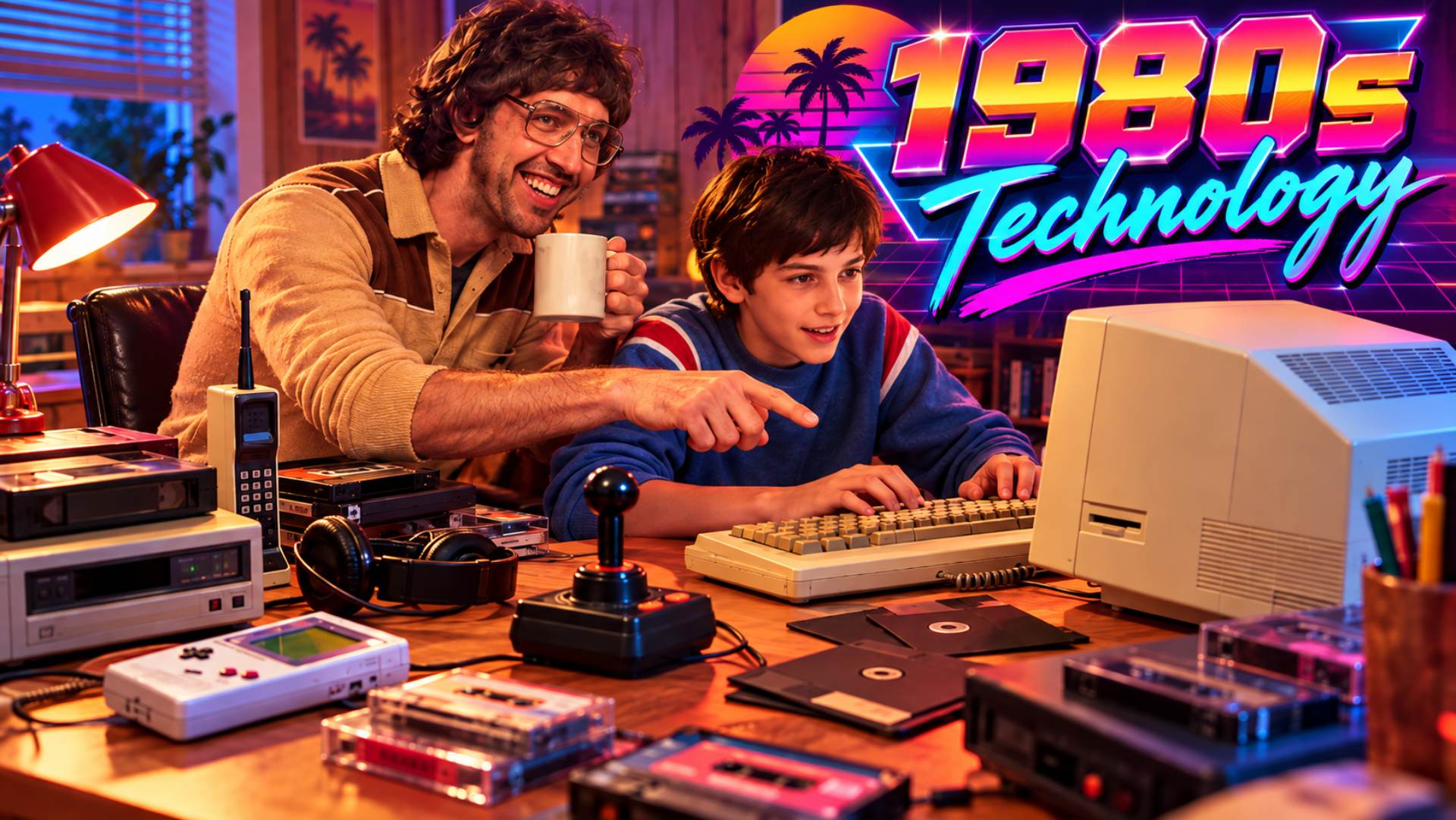
Oct 4, 2026 · @Mohnesh Kohli
The smartphone in your pocket did not appear out of nowhere. It is the result of dozens of earlier inventions, and a surprising number of them took shape in the 1980s.
1980s Technology brought computers into homes, made music truly personal, put the first handheld mobile phones on the market, and laid the technical groundwork for the internet and GPS. At the time, many of these devices were expensive, bulky, or niche. Few people could have guessed how deeply they would change everyday life.
This article looks at the most influential 1980s technologies, one by one. For each, you will see what it was, why it mattered, and the chain of innovations it led to, right up to the tools we use today.
1980s Technology at a Glance
These Tech Innovations of the 1980s were chosen because each one started a clear line of development that still shapes everyday life. They are listed roughly in order of appearance, not ranked by importance.
| Technology | Key 1980s Milestone | What It Led To |
|---|---|---|
| Personal audio | Sony Walkman, launched in 1979, becomes a global hit through the 1980s | MP3 players, wireless earbuds, and music streaming |
| Home computers | IBM PC in 1981; affordable home computers such as the Commodore 64 and ZX Spectrum in 1982 | Laptops, tablets, and computing in every home and office |
| Compact disc | CDs go on sale in 1982 | Digital audio, digital media files, and streaming |
| Internet protocols | ARPANET switches to TCP/IP in 1983 | The global internet as we know it |
| Mobile phones | Motorola DynaTAC 8000X goes on sale in 1983 | Smartphones and mobile internet |
| Home consoles and handhelds | Famicom in 1983 (NES in North America in 1985); Game Boy in 1989 | Modern consoles, mobile gaming, and a global games industry |
| Graphical interface | Apple Macintosh brings a mouse-driven interface to the mass market in 1984 | Windows, icons, and the touchscreens on today’s devices |
| The World Wide Web | Tim Berners-Lee proposes the web at CERN in 1989 | Websites, search engines, and online business |
| GPS | Satellite launches continue through the decade, with civilian use planned | Navigation apps, ride-hailing, and location-based search |
Key Highlights
■The 1980s accelerated the rise of personal computing, bringing computers into homes, schools, and workplaces.
■Technologies such as the compact disc, mobile phone, TCP/IP, GPS, and graphical interfaces helped shape modern digital life.
■Devices like the Walkman, Game Boy, and early camcorders made technology more personal, portable, and accessible.
■Many modern tools, including smartphones, streaming services, navigation apps, and online platforms, can trace their development back to 1980s innovations.
■The decade showed how expensive, niche technology can become mainstream once it becomes cheaper, easier to use, and widely connected.
Personal Computers: From Hobby Machines to Everyday Tools
What Happened in the 1980s
The Rise of Personal Computing accelerated during the 1980s. Computers had existed earlier, but they were mostly found in universities, governments, and large companies before the decade brought them into ordinary offices and homes.
The IBM Personal Computer, released in 1981, quickly became a standard for business. Because other manufacturers could build compatible machines, a huge market of “PC-compatible” computers grew around it.
The 1980s Computing Revolution reached millions of families through affordable machines such as the Commodore 64 and, in Britain, the ZX Spectrum. Many people wrote their first lines of code on these machines, often by typing programs printed in magazines.
In 1984, Apple’s Macintosh popularized the graphical user interface for a mass audience. Instead of typing commands, users clicked on icons, windows, and menus with a mouse.
What it Led to
- Computers in every workplace. Word processors and spreadsheets transformed office work.
- The graphical interface we still use. Icons, windows, and pointing devices evolved into today’s desktops and touchscreens.
- A generation of programmers. Many of those early home-computer users went on to build software companies, games studios, and the digital industries that followed.
- Laptops, tablets, and smartphones. Each is, at heart, a personal computer that became smaller, more powerful, and permanently connected.
The Walkman and the CD: Music Becomes Personal and Digital
What Happened in the 1980s
Sony’s Walkman launched in 1979 and became a worldwide phenomenon during the 1980s. For the first time, people could carry their own soundtrack anywhere, listening privately through lightweight headphones while walking, commuting, or exercising.
Early Digital Technology reached everyday consumers in 1982 when the compact disc went on sale. CDs stored music digitally, offering clearer sound, no tape hiss, and the ability to skip straight to any track. Portable CD players followed later in the decade.
What it led to
- The personal audio habit. The Walkman made private, on-the-go listening normal, a behavior that MP3 players, smartphones, and wireless earbuds built on.
- Digital music. The CD showed that music could be stored as data. That idea paved the way for MP3 files, digital downloads, and eventually streaming.
- A new relationship with media. Once music became data, it could be copied, shared, compressed, and sent over networks, reshaping the entire music industry.
Today’s streaming apps and noise-canceling earbuds are direct descendants of a cassette player with foam headphones and a shiny silver disc.
Early Mobile Phones: The First Step Toward the Smartphone
What Happened in the 1980s
One of the most Influential 1980s Technology developments was the Motorola DynaTAC 8000X, which went on sale in 1983 and is widely recognized as the first commercial handheld mobile phone. It was large, heavy, expensive, and offered limited talk time on a charge. Its brick-like shape made it a status symbol rather than an everyday tool.
At the same time, the first commercial cellular networks were rolling out in several countries. These networks divided areas into “cells,” each with its own transmitter, allowing calls to be handed off as users moved.
What it led to
- Smaller, cheaper phones. Through the 1990s, mobiles shrank and became affordable for ordinary consumers.
- Text messaging. Digital networks introduced SMS, creating an entirely new way to communicate.
- Mobile internet. Faster networks allowed phones to browse the web, send email, and run apps.
- The smartphone. Today’s devices combine the phone with the computer, camera, music player, and map, turning a 1980s status symbol into the center of daily life.
The biggest legacy of the early mobile phone is the idea that communication belongs to a person, not a place.
The Internet’s Foundations and GPS: Invisible but Essential
Some of the most important Breakthrough Technologies of the 1980s were not gadgets at all. They were systems such as internet protocols and GPS running quietly in the background.
The Internet’s Building Blocks
In 1983, ARPANET, a US research network, switched to a set of rules called TCP/IP. These protocols let different networks communicate in a common language, and they still underpin the internet today. The Domain Name System, which turns numeric addresses into readable names, was also developed in the early 1980s.
Then, in 1989, Tim Berners-Lee, working at CERN in Switzerland, proposed a system for linking documents across computers. That proposal became the World Wide Web, which launched publicly in the early 1990s.
GPS
The Global Positioning System was developed by the US military, with satellites launched from the late 1970s onward. During the 1980s, the US government committed to making GPS available for civilian use. The system was declared fully operational in the mid-1990s.
What they led to
- The online world. Email, websites, search engines, social media, and online shopping all rest on these foundations.
- Location-aware services. Navigation apps, ride-hailing, delivery tracking, and “near me” searches depend on GPS.
- AI search and assistants. Today’s AI tools draw on the vast, connected web that grew from these 1980s building blocks.
Home Consoles, Handhelds, and Camcorders: Entertainment Goes Personal
Video Game Consoles and Handhelds
After the North American video game crash of 1983, the industry needed a revival. Nintendo’s Family Computer, or Famicom, launched in Japan in 1983 and arrived in North America as the Nintendo Entertainment System in 1985. Its success helped rebuild home gaming and established franchises that are still running today.
In 1989, Nintendo’s Game Boy made gaming truly portable, with interchangeable cartridges and long battery life.
What it led to: This was another example of Technology That Shaped Modern Life, leading to modern consoles, online multiplayer gaming, and today’s enormous mobile gaming market. The idea of playing games anywhere, on a device you carry, traces back to that chunky gray handheld.
Consumer Camcorders
During the 1980s, video cameras became compact enough for families to buy, combining a camera and a recorder in one device. For the first time, ordinary people could easily film birthdays, holidays, and everyday life.
What it led to: Home video turned ordinary people into filmmakers. That habit evolved through digital cameras into smartphone video, online video platforms, and today’s creator economy.
Lessons from 1980s Innovation
Looking back, a few patterns stand out. They are just as useful for understanding technology today.
- Expensive and niche often comes first. The first mobile phones and personal computers were costly and limited. Mass adoption came once prices fell and usefulness grew.
- Standards create ecosystems. The PC-compatible standard and TCP/IP succeeded because many companies could build on them. Shared standards often matter more than any single product.
- Ease of use drives adoption. The graphical interface made computers approachable for people who would never type commands. Simplicity often beats raw power.
- Separate devices tend to merge. The Walkman, camera, phone, game console, and map all eventually converged into the smartphone.
- The biggest impact can be invisible. Few people noticed TCP/IP or GPS in the 1980s, yet they became some of the decade’s most consequential technologies.
The Foundations of Modern Technology established during the 1980s are still visible today, and many of the same patterns are now playing out with AI. Early tools can seem rough, but as they become easier to use and more widely integrated, they are reshaping how people search, work, and make decisions.
FAQs
What was the most important technology of the 1980s?
There is no single answer, but the personal computer and the internet’s foundational protocols had especially far-reaching effects. Together, they made modern computing and the online world possible.
When was the first mobile phone sold?
The Motorola DynaTAC 8000X, widely recognized as the first commercial handheld mobile phone, went on sale in 1983.
Was the internet invented in the 1980s?
The internet developed over several decades. Key building blocks arrived in the 1980s, including the switch to TCP/IP in 1983 and the proposal for the World Wide Web in 1989. The web became publicly available in the early 1990s.
When did the Walkman come out?
Sony launched the Walkman in 1979. It became a global bestseller through the 1980s and defined personal, portable music for the decade.
How did 1980s technology lead to the smartphone?
Modern mobile technology combines several 1980s innovations in one device: the personal computer, graphical interface, mobile phone, personal audio, digital media, GPS, and internet connectivity.
Final Thoughts: The Decade That Built Today
The 1980s gave us beige computers, brick-sized phones, cassette players, and chunky handhelds. They look quaint now, but each one started a chain of innovation that leads directly to the devices and services we rely on every day.
The 1980s Tech That Changed the World included personal computing, portable music, mobile communication, the internet, and GPS, all of which took crucial steps forward during that decade. Combined, they became the smartphone, the web, and now AI-powered search.
The pace of change has not slowed. Just as the phone book gave way to search engines, search engines are now sharing the stage with AI assistants. At Megrisoft, we help businesses stay discoverable through each shift, with SEO, AI search optimization, and modern web development. If you want your brand to be ready for the next wave of technology, get in touch with our team.