
 By Alexandra Harper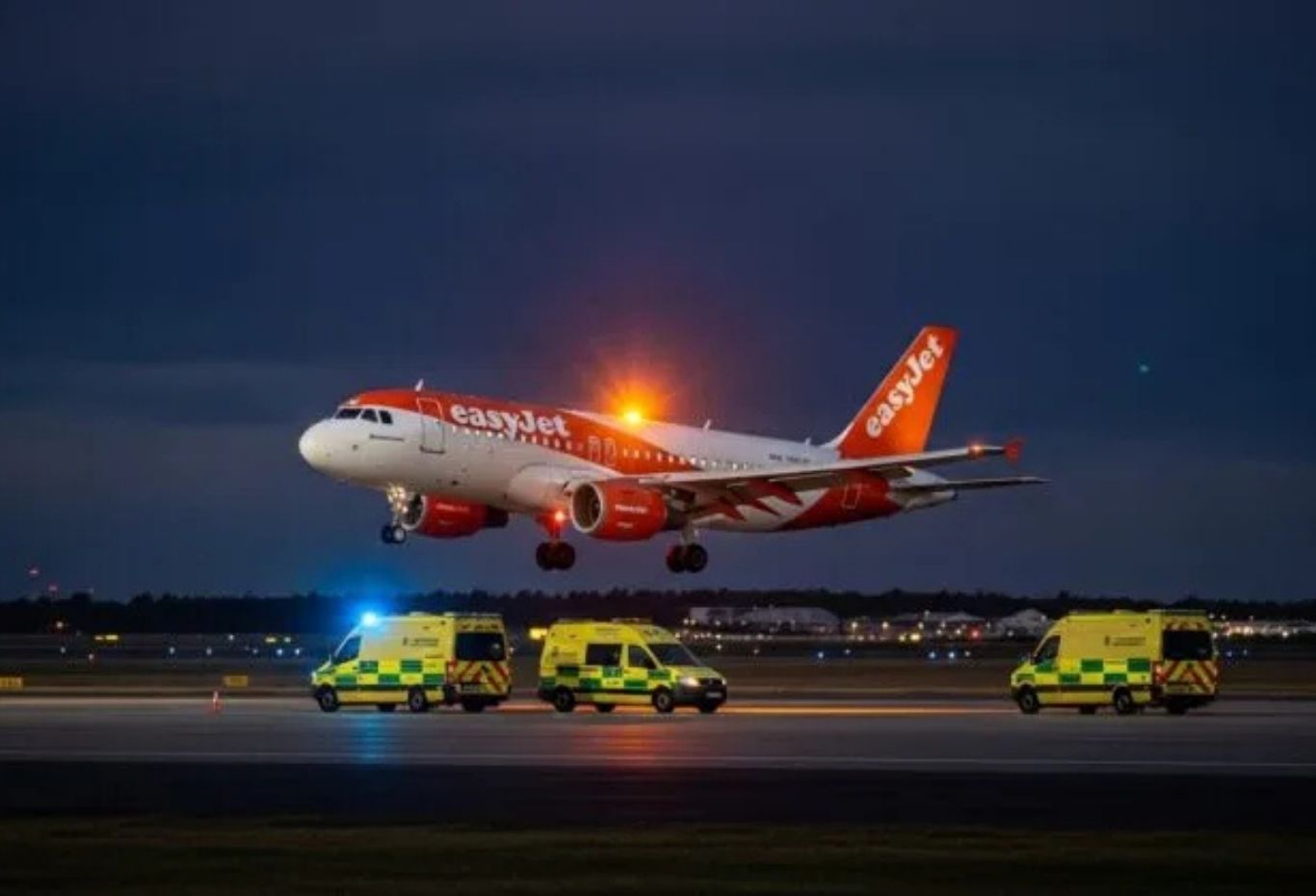
A routine evening flight from Copenhagen to Manchester rarely makes news. But when easyJet flight U2238 went to Newcastle instead of where it was supposed to go because of an emergency, it quickly became an event that people looked for, shared, and tried to figure out. Was it a problem with the machinery? A scare about safety? Or something much less dramatic but still very important?
You probably want a clear answer if you looked for “easyjet flight u2238 emergency landing newcastle.” What really occurred, who was impacted, and what does it mean for flight safety? There is more to the story than what many news stories say, but it’s still important to know all the details because they show how modern aviation deals with real-time risk.
What went wrong with flight U2238 of easyJet?
The easyJet flight U2238 left Copenhagen for Manchester in the evening of October 27, 2025. The plane, an Airbus A320, reached its cruising level and flew across the North Sea on a normal path to reach the UK. Everything seems to have been normal for most of the trip.
That changed in the air. As the crew got closer to the east side of England, they called for a general emergency and turned around to go to Newcastle Airport instead of Manchester. Flight tracking data shows that the plane arrived safely at 22:52 GMT, where emergency services were already waiting.
This is where it matters. The information that is available and can be checked points to a medical situation involving a passenger on board. Later, easyJet confirmed that the reason for the delay was “a customer requiring urgent medical attention.” When the plane arrived, medical staff were waiting for it.
The flight went on to Manchester after a short stop. That fact alone tells you a lot about what happened, since planes with technical problems that haven’t been fixed rarely get back on the road so quickly.
Why the plane went to Newcastle instead
Diversions aren’t just arbitrary choices made in a hurry. They’re well-thought-out decisions based on distance, runway capacity, weather, and readiness for emergency action. In this case, Newcastle was the closest airport that could provide quick medical help.
But here’s the thing. In these cases, speed is more important than ease of use. If a passenger’s health is serious, even a 20-minute difference in landing time can affect outcomes. Pilots are taught to focus on the fastest and safest route instead of the original location.
That’s a good fit for Newcastle Airport. It’s a fully prepared international airport with emergency medical access and air traffic control capable of handling unscheduled arrivals. It’s often one of the first good places for a flight coming in from the northeast to go around.
And that choice is in line with normal aviation practice. The Federal Aviation Administration of the United States says that pilots must think about “the nearest suitable airport” when dealing with emergencies, especially when there are medical problems. This idea is used a lot in aircraft systems around the world.
What it really means to “emergency land”
People usually get scared when they hear the word “emergency landing,” but it’s often used in the wrong way. In aviation words, it just means that the crew called an emergency and made landing the most important thing. It doesn’t always mean something bad or dangerous is going to happen.
Reports say that the plane sent the universal emergency number 7700, which stands for “squawk 7700.” That symbol tells air traffic control to clear the area around the plane and give it priority right away. A lot of different situations can happen with it, even medical problems.
This is what most people get wrong. You can’t tell what’s wrong with Squawk 7700. It only means that you need to pay attention to something right away. What could be that? It could be a sick passenger, a technology problem, or even a safety issue.
The situation here is important. There’s no credible proof from reliable sources pointing to mechanical failure or structural problems with the aircraft. The fact that the flight continued after landing makes it very likely that the problem was medical and not technical.
How airlines handle medical situations during flights
A lot of people don’t realise how regular medical emergencies are in the air. The U.S. Centers for Disease Control and Prevention say that one out of every 604 planes has one. It doesn’t happen that often for people to think it’s normal, but airlines plan for it a lot.
The cabin crew is trained to help people in emergencies. They check out the passenger, give them basic care, and talk to the cockpit about what’s going on. Most commercial planes have emergency kits and automated external defibrillators on board, which can be very helpful in heart emergencies.
That’s not the end of the process, though. There are medical advisory services on the ground that many planes use. These services let doctors help the crew in real time. These experts help figure out if the problem can be handled onboard or if it needs to be diverted right away.
This is where things get interesting. A big study from 2025 that was released in JAMA Network Open looked at almost 78,000 medical events that happened during flights and found that only 1.7% of them led to diversions. That means that the vast majority are dealt with without changing course. This shows how important a problem needs to be before a diversion is ordered.
So when a flight like U2238 goes in a different direction, it’s generally because the pilots think it’s safer to land early than to wait until they get to their destination.
How passengers felt during the break
If you had been on that trip, it would have been tense but under control. People in the cabin may have seen the staff moving quickly and possibly making announcements asking for medical workers to come on board. That’s what most people do when someone is really sick.
Once they get there, the mood usually changes. The captain may let the passengers know that the plane is going in a different direction, but they usually don’t give many details to avoid confusion or fear. At the same time, air traffic control makes a clear way to the diverted airport.
When the plane lands, emergency cars are often visible, which can make passengers more worried. But that reaction is normal and doesn’t always mean that the danger is getting worse. Medical teams get on the plane or meet it at the gate to help the sick passenger.
After that, the flight may go on if the plane is still safe and working. That appears to be what happened in this case, with passengers finally reaching Manchester after a delay.
Was there a chance that the plane would crash?
A lot of people ask this question in their heads, even if they don’t say it that way. And the proof we have shows that there was no sign that the plane itself was in danger.
There are backups for every part of an aeroplane system, and when something major breaks, the plane has to be grounded or inspected for a longer time. Because U2238 kept going after the stop, it seems like there wasn’t a problem.
Still, not having any proof is not the same as being sure of something. When regulators don’t require it, airlines don’t usually share detailed operational statistics. But if there had been a big technical problem, it would have probably been brought to light through aviation safety channels or follow-up news stories.
Then what does this really mean? The most likely explanation is that the diversion was done out of safety concerns for the passengers’ health, not to protect the integrity of the aeroplane.
Why news like this get shared so quickly on the web
Search interest in these kinds of events usually grows faster than verified reports. A single aviation alert or short news story can lead to dozens of rewritten pieces, many of which add guesses or general opinions without any new information.
Some of those pages look polished, but they have mistakes, unclear claims, or the same words used over and over. There may be dramatic language about “mid-air emergencies” that doesn’t match up with what happened. That means you should be careful.
But here’s the more important thing. A lot of feeling goes into aviation events. Even when everything is under control, words like “emergency” and “diversion” make you think of danger. That space between what people think and what is really true is where misinformation tends to spread.
Stick to sources that use flight data, official airline statements, or well-known aviation news if you want to stay grounded. People who believe those tend to stick to what can be proven rather than what sounds exciting.
What this event tells us about the safety of aeroplanes
A sudden change of plans can be seen as a failure. Most of the time, it’s the opposite. It shows that the system is doing what it’s supposed to do, with multiple levels of reaction ready for when something unexpected happens.
They are taught to be cautious when making decisions as pilots. If there’s any doubt about a passenger’s health, they won’t take a chance on getting them to their location. They will change course, land, and let medical staff take over.
A big part is also played by air traffic control. When an emergency is announced, controllers put the planes ahead of other traffic and work with the destination airport to make plans. One reason why commercial flight is still one of the safest ways to travel is that it is so well coordinated.
This is pretty much what happened with U2238. There was no problem with the safety devices. It showed how those processes work when they are under a lot of stress.
Questions People Ask Often
Did easyJet flight U2238 have to land in Newcastle because of an emergency?
In fact, the flight went to Newcastle instead after calling in an emergency. It arrived safely, and the problem seems to have been caused by a medical problem with a passenger.
So what went wrong with flight U2238?
The airline said that a passenger needed emergency help right away. There is no solid proof that the plane has a mechanical or technology issue.
Was anyone killed or badly hurt?
No reliable stories have said that anyone died because of the incident. The sick person got medical help after the plane landed, but no other information was made public.
Why did the plane not keep going to Manchester?
It’s likely that the team decided that the person needed medical help right away. When this happens, it is common to divert to the closest airport that is acceptable.
What does “squawk 7700” mean?
It’s a transponder number that tells air traffic control there is a general emergency. It doesn’t say what kind of emergency it is, but it makes sure that it gets handled quickly.
Did the flight go on after it landed in Newcastle?
Yes, the plane went to Manchester after the medical problem was fixed. This means that the plane itself was still fully functional.
In conclusion
At first look, events like the easyJet flight U2238 diversion may seem dramatic. It’s normal to think the worst when you see the words “emergency landing.” But when you take out the noise, the story is much easier to understand and less scary.
What happened on that trip is typical of how planes work. The crew quickly helped a customer who needed medical help right away, and the plane safely landed at the next available airport. There’s nothing wrong with the system there. It’s the way the system is meant to work.
There’s always a chance of something going wrong in aviation stories, especially when there aren’t many facts. But all the evidence we have points in the same way. There are no signs of mechanical failure or wider risk, and this should only be seen as an important but under control medical distraction.
That’s the part you should remember. Not having any crises isn’t what makes commercial aviation what it is. It depends on how well those situations are dealt with when they happen.