
 By Alexandra Harper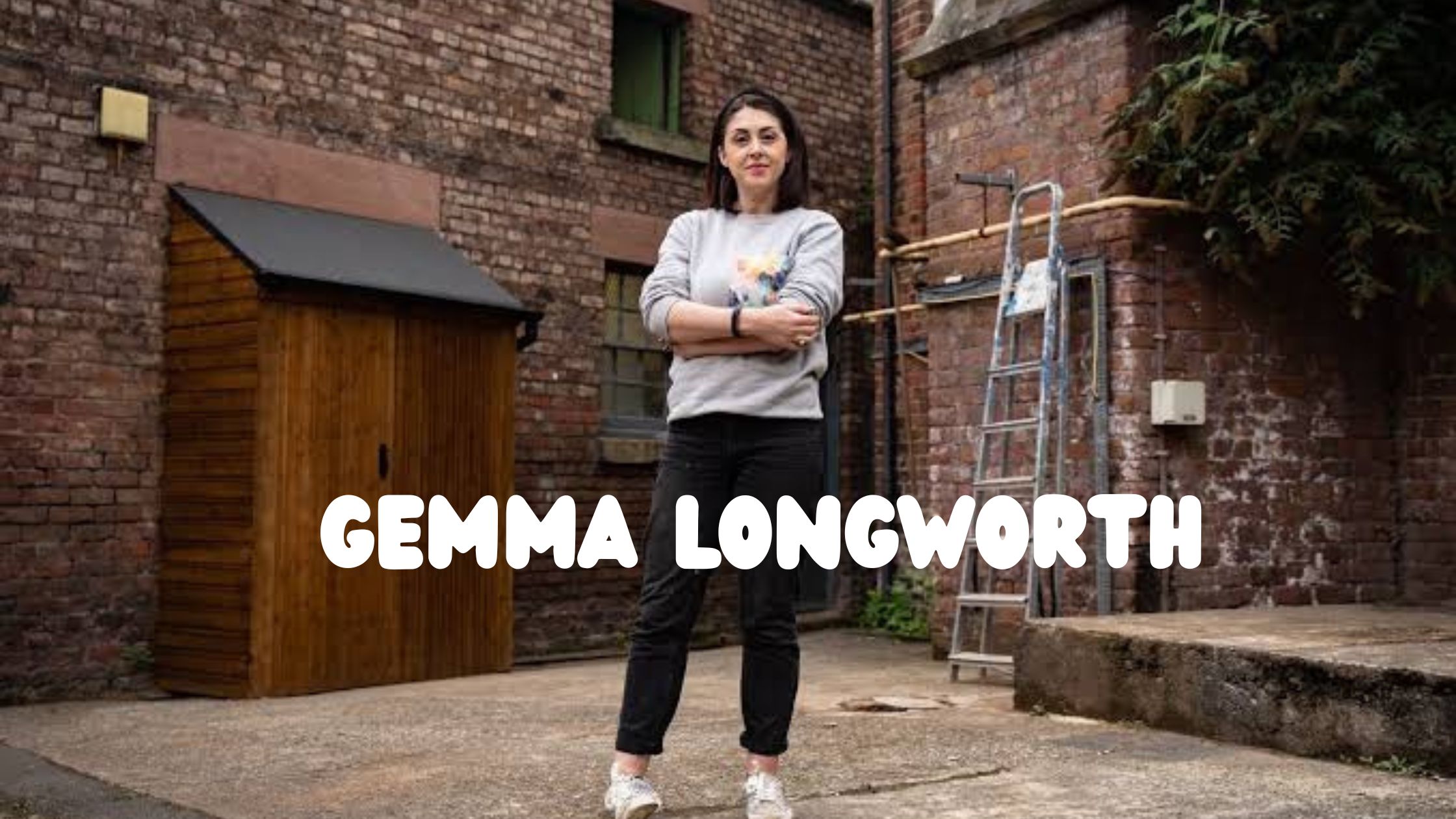
Gemma Longworth has become a familiar face to daytime television audiences through Find It, Fix It, Flog It, where her talent for transforming forgotten furniture into beautiful, functional pieces has earned her a loyal following. Yet her career reaches well beyond the workshop. Based in Liverpool, she has built a diverse creative life as an artist, furniture upcycler, television presenter, author, and creative wellbeing practitioner, bringing together craftsmanship, education, and emotional support in a way that feels both authentic and deeply personal.
Her journey has been shaped by far more than a passion for interiors. With a background in textiles and years spent leading creative workshops in hospitals and community settings, Longworth has long believed that making things by hand can be a powerful form of self-expression and recovery. Personal experiences of loss have also influenced her work, reinforcing her commitment to helping others reconnect with confidence, memories, and wellbeing through creativity. In many ways, her career bridges the practical art of restoring furniture with the quieter process of helping people rebuild themselves.
Many people first search for Gemma Longworth after seeing her on television, curious to learn more about the woman behind the paintbrush and power tools. What they discover is a story that goes well beyond home makeovers. While upcycling brought her into the public eye, her wider career has been shaped by professional art training, community engagement, and a lasting belief that creativity can enrich lives in ways that extend far beyond the finished piece.
Childhood and Family History
Liverpool, where Gemma Longworth was born, continues to play a significant role in her career and public persona. From her early schooling to her subsequent seminars, studio practice, and bigger public initiatives, her career has been intimately linked to Merseyside’s creative scene. Rather than being classified as someone who merely made an appearance on television following a traditional media career, she is frequently associated with Liverpool’s independent arts scene.
Her younger brother’s passing is among the most significant details regarding her early years. Her choice to experiment with art, textiles, and drawing as a means of grieving has been connected in public interviews to that loss. According to Longworth, creating art in her brother’s honour helped her comprehend the emotional power of creation before it became her career.
The artisan customs of her early years are also influenced by her family. She learned and absorbed artistic habits from older relatives, such as knitting and sketching, according to public accounts of her early business. These particulars are important because Longworth’s later work is not presented as an abrupt lifestyle brand; rather, it developed from familiar, home, hands-on creating that subsequently evolved into formal study, commerce, television, and therapeutic practice.
Learning and Initial Creative Goals
Longworth’s educational trajectory was distinctly innovative. Before branching out into applied arts, drawing, textiles, and therapeutic applications of creativity, she studied art and design in Liverpool. In addition to helping her improve the technical aspects of her work, her formal education provided her with a framework for considering art as a means of assisting individuals in overcoming challenging emotional situations.
She studied several forms of art and design at the City of Liverpool College after graduating from school. Someone who would thereafter transition between fabric, paint, furniture, found objects, interiors, and group workshops would benefit from such a broad early training. Longworth developed a career from the intersection of practical making and emotional expression rather than picking a single, limited profession and sticking with it.
Later, she pursued postgraduate studies in textiles and studied drawing and applied arts. Her studies also connected to art therapy and the utilisation of creative activity in care settings. Her work with hospitals, grief assistance, and creative wellbeing groups made this interest one of the most distinguishing aspects of her profession.
Hospital Workshops, Art, and Grief
One of the most significant aspects of Longworth’s biography is her work with bereaved children and families. She got involved in artistic endeavours related to Liverpool’s Alder Hey Children’s Hospital both during and after her studies. Her work included providing art-based support to kids who are grieving, enabling them to communicate emotions that are difficult to articulate.
Her public message about craft frequently sounds more profound than ornamentation because of this aspect of her life. on Longworth, creating something is more than just creating a gorgeous item on a shelf or a freshly painted chair for a space. Additionally, it can help someone maintain their memory, relieve stress, establish a habit, and feel somewhat in control during a difficult period.
She does not, however, portray craft as a panacea, and responsible readers should not approach it in that manner. It is better to view her work as artistic support rather than as a substitute for medical assistance. The problem is that many people find that a guided creative session can provide a safe space, particularly when discussing grief or anxiety head-on feels too challenging.
The Button Boutique and Starting a Company
The Button Boutique, a creative endeavour that Longworth started after realising that the jobs available did not align with the life she intended to create, was her first significant public company identity. She made her own role rather than waiting for the ideal one. Her passion for fabrics, handcrafted items, vintage decorating, workshops, events, presents, and repurposed home goods was evident in The Button Boutique.
Practical craft courses and local creative demand drove the business’s growth. It provided Longworth with a foundation from which she could instruct, market, conduct experiments, and establish connections with individuals who wished to manufacture their own goods. It also demonstrated her ability to turn her artistic training into a successful business, which is not always simple for graduates in creative fields.
The Button Boutique was more than just a shopfront concept. It was a community place, a workshop, a studio, and an embodiment of Longworth’s conviction that creative confidence is teachable. During this phase of her profession, she developed her ability to interact with novices, oversee actual clients, conduct sessions, and make creative work seem approachable rather than daunting.
Achievement in the Field of Find It, Fix It, Flog It
Gemma Longworth gained widespread recognition through the Channel 4 restoration and upcycling program Find It, Fix It, Flog It, as well as subsequent UKTV viewership. The show follows presenters and restorers as they locate abandoned objects in homes, sheds, barns, and lock-ups, then fix or repurpose them into pieces that can be sold. Longworth’s role exposed a national audience to her creative vision and practical furniture talents.
She is frequently associated with Simon O’Brien’s side of the show on screen, where vintage items are transformed into decorative or functional pieces. Her ability to make unpleasant, undesirable, or awkward stuff seem worthwhile is what makes her role appealing. Viewers witness her painting, sanding, rethinking shapes, selecting finishes, and figuring out how to bring neglected pieces back to life.
Longworth’s public profile was altered by television, but her talent was not developed by it. She had years of artistic practice, business experience, and workshop teaching under her belt by the time she made it to the audience. Her background contributes to the groundedness of her on-screen persona; she comes across as a professional maker who understands how much preparation goes into a successful finish rather than a presenter playing at a craft.
Style and Creative Philosophy of Upcycling
Longworth’s upcycling approach is vibrant, useful, and based on repurposing. She is drawn to the character of vintage items, particularly furniture and materials that are still valuable but require maintenance, repairs, or new uses. Her art frequently strikes a compromise between her personal passion for colour, pattern, texture, and expressive surfaces and the expectations of the general audience.
One of the quiet lessons she learns from her work is preparation. While upcycling may appear quick on TV or social media, true restoration requires patience, careful product selection, cleaning, sanding, repairs, and priming. Longworth’s method acknowledges that a piece must be able to withstand being touched, moved, sat on, opened, closed, and used in addition to looking good when the camera stops.
Additionally, her philosophy aligns with the broader interest in sustainability. Although careful reuse can prevent solid items from ending up in landfills, upcycling is not always a good thing if it is done poorly or produces waste in another way. Longworth’s work demonstrates the usefulness of that concept: creativity and talent can frequently offer a wardrobe, chair, cabinet, or table a second chance at life if it is structurally solid.
The Project for the Sir Thomas Hotel
Longworth’s contribution to the renovation of Liverpool’s Sir Thomas Hotel was one of her noteworthy public endeavours outside of television. Through the project, she was able to put upcycling principles into practice on a commercial scale instead of just in homes or television workshops. Additionally, it demonstrated how sustainable design can function in a hospitality sector where furniture must be able to withstand continuous use.
Instead than just replacing everything, the hotel renovation includes updating the existing furniture. Longworth worked on items like dressing tables, headboards, chairs, wardrobes, and bedside cabinets. The idea was to revitalise worn-out spaces while retaining high-quality pieces, not to make outdated furniture appear brand-new.
Longworth was able to establish himself as more than just a craft personality thanks to this kind of project. Consistency, durability, timeliness, and an awareness of how design affects paying customers are all necessary for hospitality interiors. Her involvement in the renovation of the Sir Thomas Hotel demonstrated that her upcycling work could progress from minor ornamental projects to significant interior revitalisation.
Creative Wellbeing and Undiscovered Treasures
Later, Longworth created Hidden Gems, a creative support initiative that combines her knowledge of wellbeing, upcycling, craft, art, and bereavement care. The idea that creativity may assist people in processing challenging emotions and re-establishing a connection with themselves is reflected in the project, which is the most intimate aspect of her work. It provides programs and courses for a range of ages, requirements, and group environments.
The increasing interest in social prescribing and creative health is closely related to Hidden Gems. Community arts, craft groups, and cultural events are being talked about more and more in the UK as means to help individuals find regularity and connection, promote mental health, and lessen isolation. Because of its practicality, warmth, and emphasis on doing rather than just talking, Longworth’s work fits in well with that movement.
Hidden Gems is a fitting term for her broader public persona. She is drawn to objects and people that would go unnoticed, such as an unneeded cabinet, a skill that has been lost, or someone who is having difficulty recognising their own worth following a loss. Her work has an identifiable emotional core because of the relationship between object repair and human confidence.
Create Your Remedy and Become a Writer
With the release of her book Craft Your Cure: 25 craft and upcycling projects to cure and offer joy in 2025, Longworth’s work on creative wellbeing became more widely known. Her love of creating, her personal narrative, and her conviction that craft can help people through difficult times in life were all included in the book. Additionally, it helped readers who were familiar with her via television to comprehend the underlying motivations behind her work.
Crafts, textiles, upcycling, and do-it-yourself crafts are all included in the book. Its goal is to inspire people to slow down, utilise their hands, and create something with emotional significance in addition to teaching a technique. This contrast is crucial because Longworth’s art frequently starts with an object and concludes with a feeling, such as relief, pride, tranquillity, recollection, or confidence.
Her public persona also changed as she became an author. She became a voice in the broader discussion about creativity and welfare, rather than just the woman viewers knew from a restoration program. Her ideas, which she had been developing for years through hospital work, community sessions, upcycling, and personal experience, were given structure by the book.
Private Life, Family, and Relationships
Gemma Longworth has openly discussed some significant familial background, particularly in relation to her younger brother’s passing and how it influenced her artistic life. Because it links her personal pain to her later concentration on art, memory, and healing, that tale is essential to comprehending her work. It also explains why her public mission now includes bereavement support as a major component.
The public has less trustworthy information regarding her marriage, children, and intimate relationships. Longworth has not based her public identity on her intimate exposure, in contrast to certain television celebrities. Her work, education, upcycling, creative endeavours, brother’s passing, book, and community involvement are the subjects of the most reliable public content.
Therefore, unless Longworth has personally verified them in a trustworthy public forum, claims regarding a spouse, partner, or children should be handled with caution. A decent biography shouldn’t use conjecture to fill in personal voids. It is safe to say that her creative direction was impacted by family loss and that her public work frequently recognises the emotional significance of memory, connection, and care.
Sources of Income and Projected Net Worth
Gemma Longworth’s precise net worth cannot be verified by any reliable public record. Unless it is supported by verified accounts, official disclosures, or direct confirmation, any specific figure that is circulating online should be regarded as an estimate. She is not a celebrity whose finances are publicly disclosed through large contracts or files; rather, she is a working creative professional.
Television work, furniture upcycling, interior projects, creative workshops, public appearances, writing, and initiatives related to Hidden Gems seem to be some of her sources of revenue. In addition, she has managed creative enterprises and collaborated with community and wellness organisations. Instead of a single substantial source of revenue, such streams imply a diverse creative profession.
In actuality, one of the weakest aspects of online celebrity biographies is frequently net worth. For someone like Longworth, the more valuable financial narrative is not an estimated sum but rather how she has made a living in a number of related industries. Her career demonstrates how a contemporary creative worker may integrate design projects, craft, media, education, community service, and writing into a single public persona.
Public Perception and the Reasons Viewers Adore Her
Longworth is a friendly, pragmatic, and emotionally transparent public persona without being overly visible. She comes across on television as a maker who appreciates the problem-solving aspect of objects: what can be altered, what can be salvaged, and what can surprise people when it’s finished. One of the main reasons viewers remember her is because of that kind of kindness.
She does not portray creativity as something that only specialists possess, which is another aspect of her appeal. She has dedicated a significant portion of her professional life to teaching common people how to create, fix, and experiment. This makes her work accessible to people who might never be professionals at furniture restoration but still want to paint a chair, fix a cushion, join a craft group, or create something meaningful after a trying time.
Her public persona also has a strong sense of place. Longworth’s professional networks, language, and projects all still reflect her Liverpool heritage. Liverpool is a part of the creative ecology that shaped her and continues to sustain a large portion of her work, so it is more than just a biographical element.
Gemma Longworth’s Current Location
The best way to describe Gemma Longworth today is as a creative professional who works in the fields of television, upcycling, writing, interior design, and wellness. She maintains a connection with audiences who appreciate practical design and restoration through her work with Find It, Fix It, Flog It. She contributes to a wider discussion about craft, mental health, grieving assistance, and sustainable living through her book and Hidden Gems work.
Her current public persona appears to unite her two primary identities. The adept upcycler who can transform unwanted items into something practical and appealing is one identity. The other is the creative support professional, who recognises that creating things can aid in emotional processing, confidence restoration, and a reduction in feelings of isolation.
Her future chapter will probably be defined by that mix. Longworth’s work seems appropriate given the growing interest in repurposed interiors, repair culture, and creative wellbeing. She stands for a kind of craft that is useful, intimate, and grounded in reality rather than just nostalgic or ornamental.
Common Questions
Gemma Longworth: Who is she?
Gemma Longworth is an artist, upcycler, TV host, writer, and creative wellness specialist from Liverpool. Her work on Find It, Fix It, Flog It, where she assists in restoring and repurposing unwanted items, has made her most famous. She has established a career in textiles, furniture restoration, workshops, community projects, and creative support work outside of television.
What has made Gemma Longworth well-known?
Her most well-known appearance was on the show Find It, Fix It, Flog It, which is about selling and repairing abandoned objects. She is well-known to viewers for her vibrant design sense, practical upcycling abilities, and capacity to transform neglected items into functional pieces. She is well-known for both her wellness-focused artistic work and her book Craft Your Cure.
Gemma Longworth is from where?
Liverpool is Gemma Longworth’s hometown, and the city has continued to play a significant role in her career. She participated in public projects in the city, worked with local organisations, developed innovative enterprises, and studied there. Many viewers and readers comprehend her work in part because of her Liverpool identity.
Does Gemma Longworth have a spouse?
Gemma Longworth’s marital status is not publicly known. Her artistic work, television career, education, family loss, upcycling projects, and wellness practices are the key topics covered by credible public sources. It is more appropriate to state that her marital or relationship status is not publicly confirmed until she personally verifies private information.
Is Gemma Longworth a parent?
There isn’t any solid public evidence that Gemma Longworth is a mother. This information should not be presented as fact without a reliable source because many online biography pages make unsubstantiated claims about public figures. Longworth’s career, family history, workshops, television work, and innovative health initiatives are the main focus of her public persona.
What is the book written by Gemma Longworth?
Craft Your Cure: 25 craft and upcycling projects to cure and offer joy is a book written by Gemma Longworth. It blends her personal conviction that creating may promote emotional wellbeing with useful craft and upcycling tasks. The same themes that permeate her career—creativity, sadness, memory, colour, repair, and confidence—are reflected in the book.
What is the net worth of Gemma Longworth?
The precise amount of Gemma Longworth’s wealth has not been made public. Unless supported by trustworthy financial records or direct confirmation, any particular figure found online should be regarded as an estimate. Television, workshops, upcycling, interiors, writing, and community projects seem to be some of the creative sources of her income.
In conclusion
The life of Gemma Longworth is more than just a success story on television. It tells the tale of a creative worker who made a career with genuine emotional weight out of practical skill, art training, personal loss, and community service. Her public persona demonstrates how craft can travel from the kitchen table to the workshop, the hospital, the bookshelf, and the TV screen.
The persistence of her mission is what sets her apart. The same concept continues coming up whether she is repairing furniture, instructing a class, writing about crafts, or helping people deal with loss: broken or neglected items can still be valuable. Readers and viewers can sense the warmth of her work because of this idea.
Her career also speaks to the evolving nature of craft. Making is now seen by many as a component of sustainability, mental health, memory, and personal identity rather than just a pastime or cosmetic addition. One of the well-known British voices that connects those concepts in a useful, approachable manner is Longworth.
Gemma Longworth continues to be a person formed by both talent and emotion as she works in the fields of upcycling, television, writing, and creative wellbeing. Her significance comes from demonstrating to people that repair may be beautiful, practical, and profoundly human rather than from celebrity spectacle.