
 By Alexandra Harper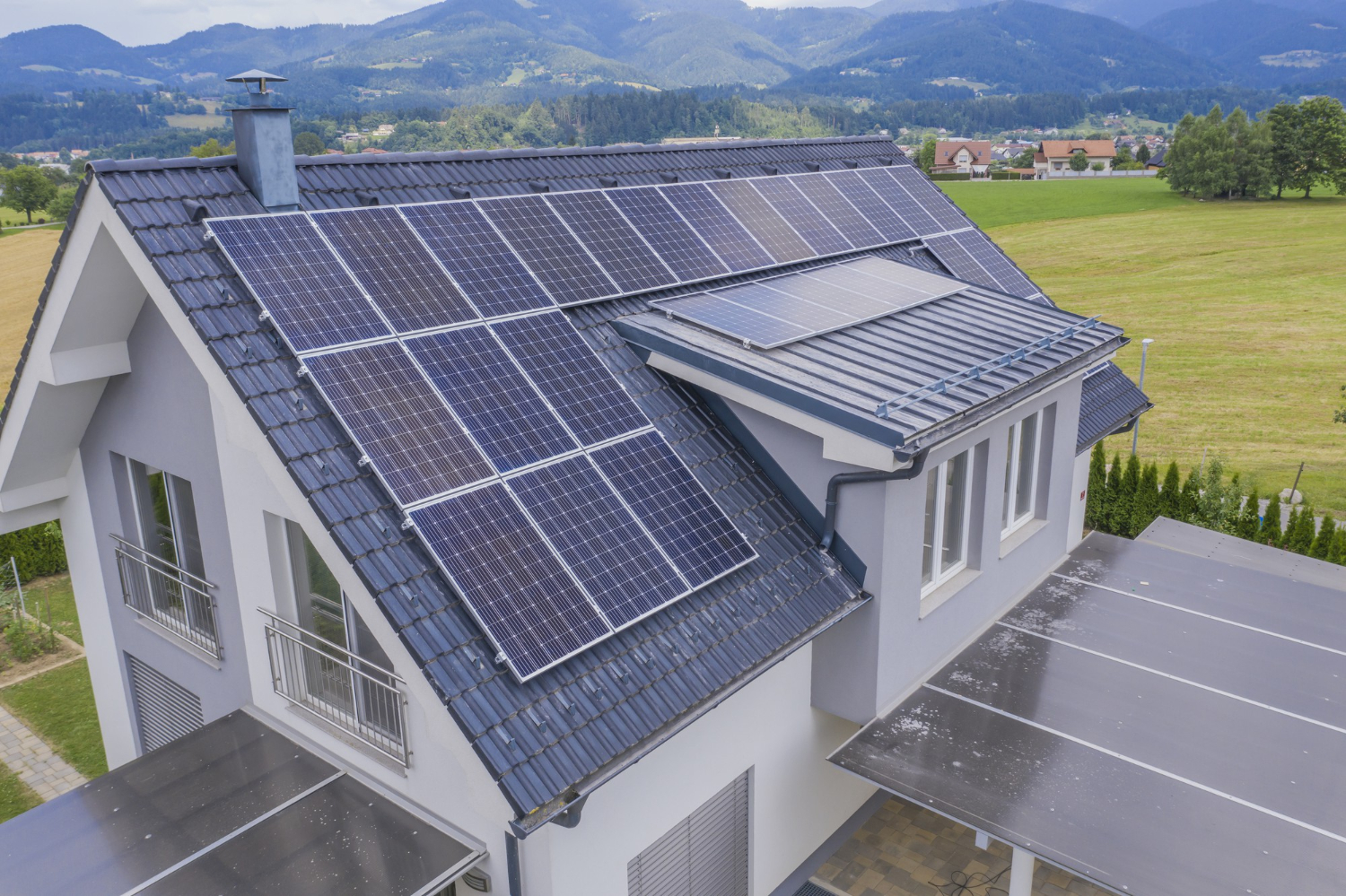
Working out how many solar panels your UK home needs isn’t quite as simple as matching a system to the number of bedrooms. Two similar-looking homes can need very different setups depending on how much electricity they use, the amount of usable roof space they have and how that roof is positioned.
The main things that affect the number of solar panels you’ll need are:
- How much electricity your household uses
- How much usable roof space you have
- Which direction your roof faces
- Whether you expect your energy use to increase
Once you understand those factors, it becomes much easier to narrow down the right system size for your property.
The Short Answer: 8 to 16 Panels for Most UK Homes
A one- or two-bedroom flat or terrace will usually need around six to eight panels, giving you roughly a 2.5kWp to 3kWp system. For a three-bedroom semi-detached house, the most common property type in the country, ten to twelve panels is more typical, or around 4kWp to 5kWp. Larger four- or five-bedroom detached homes often need fourteen to sixteen panels, taking the system towards 6kWp or beyond. These figures assume modern solar panels rated at roughly 400W to 450W each.
Treat those numbers as a starting point, though, not a quote. Two apparently similar houses can have very different electricity needs. Stratford Energy explains how much energy a solar panel produces in more detail. Once you know roughly what one panel can generate over a year in British conditions, calculating how many panels you need becomes much easier.
Work Out Your Household Electricity Consumption First
Start with your annual electricity use, measured in kilowatt hours (kWh). The easiest way to find it is to check your bills from the past 12 months or log into your energy supplier’s online account. If you don’t have a full year’s records, Ofgem’s typical domestic consumption figures provide a useful benchmark: around 1,800kWh a year for a low-usage household, 2,700kWh for medium usage and 4,100kWh for high usage. A busy family running a tumble dryer, dishwasher and several devices every day can comfortably use more.
And don’t just look at how much electricity you use. Think about when you use it. Solar panels generate most strongly during daylight hours, so if someone’s usually at home during the day, you can use more of that electricity as it’s produced. If the house is empty until six in the evening, more of your solar electricity may be exported to the grid unless you have a battery to store it. That usage pattern matters when you’re deciding whether adding more panels will actually pay off.
How Much Electricity One Panel Actually Generates in the UK
Residential solar panels have become more powerful, and 400W to 450W panels are now standard for many home installations. A single 430W panel on a reasonably well-positioned roof in England can generate somewhere around 350kWh to 400kWh a year. Across a twelve-panel array, that’s roughly 4,200kWh to 4,800kWh annually, enough to cover or exceed the annual consumption of most medium-usage households.
Location makes a difference, but perhaps not as much as you’d expect. Cornwall and the south coast receive noticeably more solar irradiance than Aberdeen, but the difference in annual solar panel output between the south of England and the north of Scotland is around fifteen to twenty per cent, rather than anything close to half.
This is where a proper installer estimate becomes useful. Ask your installer for a performance estimate based on MCS standards, taking factors such as your postcode, roof angle and orientation into account. It’ll give you a much more realistic annual generation figure than relying on a manufacturer’s laboratory rating.
Roof Space, Orientation and Pitch
There’s also a practical limit to how many solar panels you can install: the size of your roof. Each panel takes up roughly 1.7 to 2 square metres, so a twelve-panel array needs around 20 to 24 square metres of unshaded roof space. And it’s the usable space that matters. Chimneys, vents and roof windows all reduce the area available, while installers also need to leave a small border around the edges. Plenty of homeowners discover that their roof simply can’t hold as many panels as their electricity use would suggest.
Roof direction matters too. South-facing roofs generally deliver the strongest results, but east and west-facing slopes can still perform at around eighty to eighty-five per cent of that level. Splitting panels between east and west-facing roof slopes can even have an advantage because it spreads generation more evenly across the day rather than concentrating it around midday. A pitch of around thirty to forty degrees is close to ideal for UK latitudes.
Then there’s shading. A tree, chimney or neighbouring building throwing a shadow across part of your array can have a surprisingly large effect on output. Optimisers or microinverters can reduce much of that loss, but shading should still be assessed properly before the system is designed.
Matching Panel Numbers to Your Energy Goals
Before deciding how many panels to install, think about what you actually want the system to do. If your priority is self-consumption, you may want a smaller system designed around the electricity you can realistically use during the day. For an average household, that could mean around eight to ten panels. If your goal is to maximise overall generation, filling more of the available roof can make sense, with electricity you don’t use potentially sold back to the grid through the Smart Export Guarantee. Export rates vary considerably between suppliers, though, so don’t assume a larger array will automatically pay for itself more quickly.
Your future energy use matters as well. An electric vehicle can add roughly 2,000kWh to 3,000kWh to your annual electricity demand, while an air source heat pump can add 3,000kWh or more. If either is on the horizon, adding two to four extra panels from the outset may make sense, since expanding the system during the original installation is generally cheaper than bringing installers back later.
A 5kWh to 10kWh battery changes the picture too. It lets you store electricity generated around midday and use it in the evening, which can make a larger solar array more worthwhile. If a battery, EV or heat pump is already part of your longer-term plan, it’s worth considering that extra demand before deciding on the final panel count.
Checking Costs Against Reliable Figures
Solar installation prices are everywhere online, but comparison-site headlines aren’t always the best figures to base a decision on. The Department for Energy Security and Net Zero publishes official cost data for small-scale solar, based on information from the MCS installation database and updated annually. It gives you a cost per kilowatt installed rather than a marketing estimate, making it a useful benchmark when you’re comparing quotes.
There is one detail worth watching. The figures are published on two different bases, and costs measured against Total Installed Capacity come out roughly six to twelve per cent lower than costs for the same installations measured against Declared Net Capacity. Check which column you’re comparing your quote against, because using the wrong one can make a perfectly reasonable installation price look expensive.
There’s also a significant tax saving available at the moment. Qualifying solar and battery installations in residential properties are zero rated for VAT until 31 March 2027, after which the rate is legislated to return to five per cent. Beyond that, get at least three quotes from MCS-certified installers and compare projected annual generation as well as price. A cheaper system that produces less electricity isn’t necessarily the better investment, and a reputable installer should provide a written performance estimate, so you’ve got something concrete to compare.
Get an Accurate Figure for Your Home
The ranges above should give you a useful idea of the system size your property might need, but the final number depends on your home. Your electricity use, available roof space, orientation and plans all need to be considered together, which is why a proper site survey is more useful than relying on a generic online estimate.
Check your annual electricity consumption first, then think about whether an EV, heat pump or battery is likely to feature in your plans. When you speak to an MCS-certified installer, ask for a detailed performance projection alongside the quote. That way, you’ll know not just how many solar panels fit on your roof, but how many actually make sense for your home before you spend anything.