
 By Eva Martin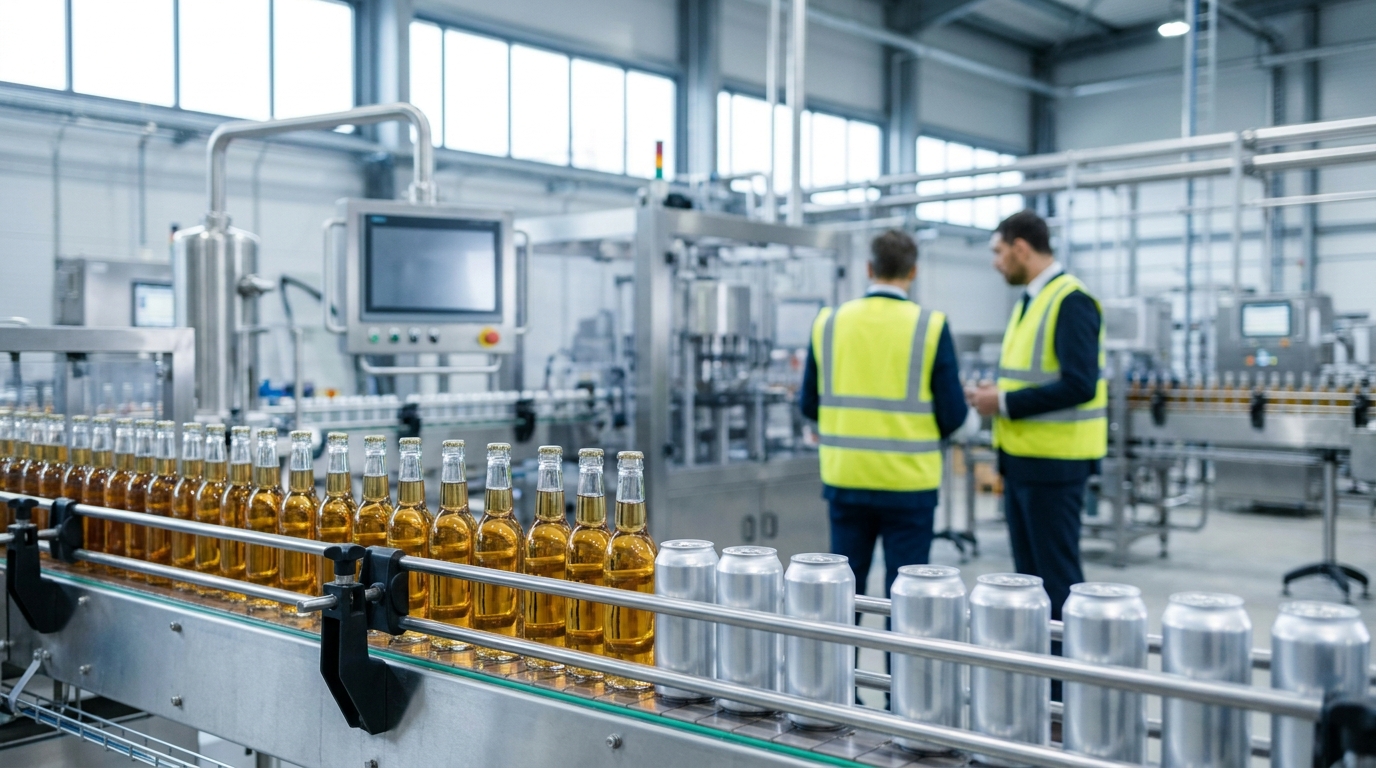
Moving from small-batch production into retail is an important milestone for food and beverage producers. It can also expose weaknesses in processes that worked perfectly well at a smaller scale. When order volumes increase, packaging needs to keep pace without creating bottlenecks, inconsistencies, or unnecessary waste.
Different packaging formats require different equipment and processes. Bottles may be handled through automated filling and closing systems, while canning machines are designed specifically for products packaged in cans. For producers working with bottled beverages, automated filling and packaging systems can help streamline repetitive filling and packaging stages.
Why Scaling Changes the Packaging Process
A small producer may be able to fill containers, apply closures, and prepare finished products using largely manual processes. At low volumes, this approach can offer flexibility and relatively simple production management.
As demand grows, however, the same process can become difficult to sustain. More orders mean more containers to fill, close, label, and handle. Tasks that once took a few hours can begin consuming a significant proportion of the working day. For beverage producers looking to manage higher volumes, automatic bottling machines can help streamline repetitive filling and handling processes.
Manual processes can also introduce greater variation. Differences in fill levels, closure application, or handling may become more noticeable when thousands of units are being prepared for distribution.
Retail supply requires consistency. Products need to arrive in a condition that meets the producer’s specifications and is suitable for presentation on shelves. Packaging automation can help establish a more controlled process as volumes increase.
Increasing Output Through Automation
One of the primary reasons producers consider automated packaging is the ability to increase output.
An automated filling line can handle repetitive stages at a consistent pace, allowing more products to move through the packaging process during a production shift. Depending on the system and product, automation may cover activities such as liquid filling, container handling, sealing, and other stages of the packaging operation.
This can reduce the pressure placed on employees by repetitive tasks. Instead of manually completing every packaging step, staff can monitor equipment, perform quality checks, replenish materials, and manage tasks that require human oversight.
The result is not necessarily a completely unmanned operation. In most cases, effective automation is about allocating people and machinery where they can work most efficiently together.
Consistency Matters at Retail Scale
When a business supplies a small number of customers directly, minor differences between individual units may be easier to manage. Retail distribution is less forgiving.
Products may be manufactured in much larger batches and distributed across multiple locations. Consistency in fill volumes, closures, and overall presentation, therefore, becomes increasingly important.
Automated equipment can provide repeatable movements and controlled operating parameters. This can help reduce variation between units and create a more predictable packaging process.
Consistency also makes quality control easier to structure. Rather than relying entirely on manual handling, producers can establish defined processes and checks around automated equipment.
Matching Equipment to the Product
There is no single packaging system suitable for every food and beverage product. The characteristics of the product, container, and closure all influence the equipment required.
Liquid products may require different filling approaches depending on factors such as viscosity, flow behavior, and container format. A system designed for a thin beverage, for example, may not operate in the same way as equipment handling a thicker food product.
Container materials and formats also matter. Bottles, cans, jars, and other packaging types require different handling and sealing methods. For canned products, can seaming is a particularly important stage because the container must be closed securely and consistently.
Selecting food packaging equipment therefore involves considering the complete production process rather than focusing on one machine in isolation.
Reducing Manual Handling
As production volumes rise, manual handling can become both time-consuming and difficult to manage efficiently.
Employees may spend large portions of their shifts moving containers, positioning packaging, checking fill levels, or repeating simple packaging actions. These tasks are necessary, but they do not always require the same level of judgment as quality assurance, production planning, or process supervision.
Automation can take over some of these repetitive activities, allowing employees to concentrate on areas where their experience adds greater value.
Reducing unnecessary handling can also contribute to a more organised production environment. When equipment performs tasks in a defined sequence, the overall workflow can become easier to monitor and manage.
Supporting Larger and More Predictable Orders
Retail demand is not always easy to predict. A new distribution agreement, seasonal increase, or successful product launch can quickly change the quantity a producer needs to supply.
Packaging capacity can become a limiting factor if production increases faster than the packaging process can accommodate. A producer may have sufficient ingredients, storage, and manufacturing capacity but still struggle to prepare finished products quickly enough for dispatch.
Automation can provide additional capacity and make packaging output more predictable. This can help businesses plan production schedules around larger orders and avoid relying entirely on additional manual labor whenever demand increases.
However, automation should be considered alongside the wider production system. Increasing the speed of one stage does not necessarily improve the entire operation if another stage remains a bottleneck.
Thinking About the Complete Packaging Line
Successful scaling requires a balanced approach. A filling machine that operates faster than the available container handling or sealing equipment may simply move the bottleneck further along the line.
For this reason, producers should consider how individual stages interact. Filling, capping or seaming, labelling, inspection, and packing all contribute to the final output.
A well-planned packaging line aims to keep these stages working together at appropriate rates. This can improve workflow and make better use of available production space and labor.
It also provides a clearer picture of where future investment may be needed as volumes continue to grow.
Planning Automation Around Future Needs
Investing in automation is a significant decision, particularly for smaller and growing producers. Current production volumes are important, but future requirements should also be considered.
Factors such as product range, container formats, available floor space, expected demand, and operational flexibility can all influence the most suitable approach.
Some businesses may benefit from automating a single repetitive stage, while others may require a more integrated packaging solution. The appropriate level of automation depends on the individual operation rather than simply aiming for the highest possible production speed.
Conclusion
Moving into retail requires food and beverage producers to think beyond how much product they can manufacture. They also need to consider how efficiently that product can be packaged, checked, and prepared for distribution.
Packaging automation can help businesses create more consistent workflows, increase packaging capacity, and reduce reliance on repetitive manual processes. When equipment is selected according to the product and integrated carefully with the wider production line, it can support growth without compromising the importance of quality control.
For producers planning their next stage of development, packaging should therefore be viewed as part of the overall scaling strategy. A process that works at a small volume may not remain suitable as demand grows. Building a packaging operation that can adapt to larger requirements can help create a more reliable foundation for long-term retail supply.