
 By Alexandra Harper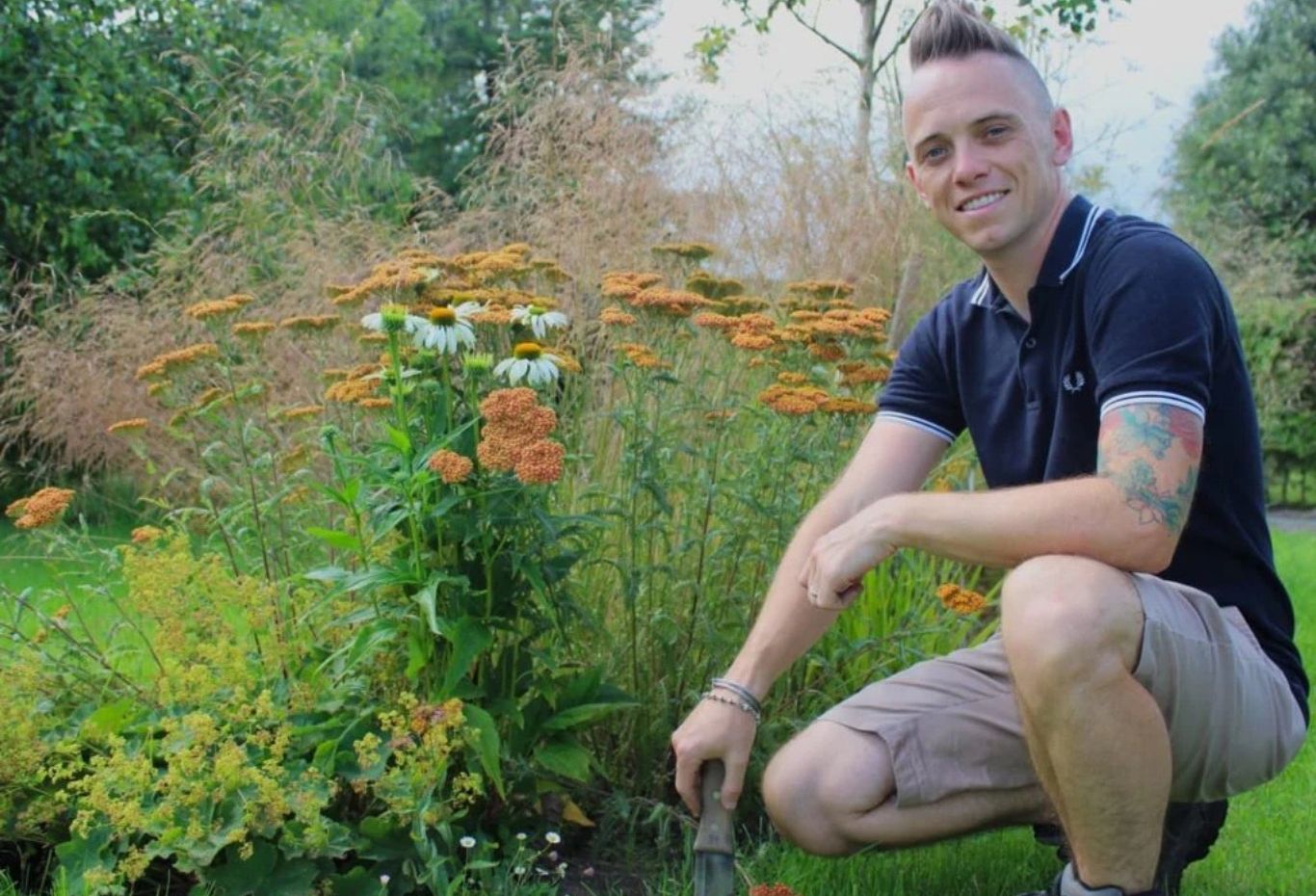
Lee Burkhill was not a polished TV personality waiting for the perfect camera when he first entered the British gardening scene. Soil, research, design work, online instruction, and a keen awareness of how lost many people feel in their own gardens helped him establish his name. Often referred to as Garden Ninja, he has emerged as one of the most personable personalities in UK horticulture, particularly for those who first came across him on BBC One’s Garden Rescue. His narrative is about more than just changing careers; it’s about transforming a personal passion for plants into a public endeavour to make gardening seem less daunting.
Burkhill’s combination of technical expertise and straightforward confidence is what makes him so appealing. Without making the topic seem closed off to novices, he can discuss planting structure, wildlife value, seasonal interest, and garden layout. In a subject that has frequently leaned traditional, his appearance, voice, and teaching manner stand out, but his work is grounded in significant real-world experience. For many viewers, he embodies a more modern type of garden expert: one who is well-trained, media-savvy, straightforward, inclusive, and refreshingly honest about the labour-intensive nature of good gardens.
Lee Burkhill: Who Is He?
British garden designer, horticultural instructor, TV host, author, lecturer, and internet creator Lee Burkhill. His design company, blog, YouTube channel, classes, and public gardening advice are all part of his most well-known brand, Garden Ninja. He is best known to viewers of television as one of the designers on BBC One’s Garden Rescue, where he assists UK homeowners in transforming their private gardens. Both TV viewers and those seeking useful gardening advice search for his name because of his public persona, which lies between accessible teaching and expert garden design.
His birth month and year are listed as February 1983 in both public sources and his own professional materials. He so belongs to a generation of garden communicators who developed a career in the era of YouTube, blogs, streaming videos, and direct audience interaction despite having grown up before social media. Garden Ninja Garden Design serves customers in Manchester, Liverpool, Southport, Cheshire, and the surrounding areas from his headquarters in the North West of England. His profession still feels like a regional practice that grew via expertise, perseverance, and media exposure, even if his work now reaches a nationwide audience.
One of the more prominent LGBTQ+ personalities on popular British gardening television is Burkhill. He has mentioned his spouse in public and talked about how his family and close friends have helped him manage his type 1 diabetes. He doesn’t share every detail of his personal life with the public, which is one of the reasons a thorough profile is required. The verified image shows a married designer who uses his platform to freely discuss gardening, health, inclusivity, and personal resilience while keeping family specifics mostly secret.
Early Years and Gardening’s Initial Love
According to Burkhill, he was drawn to gardening long before it was a career. His passion has frequently been associated with his early exposure to allotments, gardens, and the joy of cultivating things by hand. He has discussed the impact of his grandfather, who exposed him to flowers, vegetables, and agricultural rhythms. This early link is important because it explains why gardening occurs in his life as a place of safety and control rather than just as a job.
Burkhill claims that he was bullied as a teenager and that gardening served as a haven. Because he frequently speaks to people who feel uncertain, excluded, or overwhelmed, this element lends emotional weight to his subsequent teaching style. For him, the garden served as more than just a picturesque space; it was a place where he could learn, concentrate, and gain confidence without worrying about what other people would think of him. His public advise frequently has a strong anti-snobbery streak, which can be explained by this history.
Verified public information regarding his parents, siblings, childhood home, and particular schools is scarce. Burkhill has made the decision to keep a large portion of his early family life out of the public eye, therefore that absence shouldn’t be replaced with conjecture. His own public remarks make it very evident that gardening started out as a hobby rather than a career goal. Before he eventually made it the focal point of his career, it remained with him throughout his teens and adulthood.
Training, Education, and the Path to Horticulture
Burkhill did not start out as a full-time gardener. He worked in IT for about 12 years, including project management, before Garden Ninja became his vocation. Although borders, soil, planting plans, and garden makeovers may seem unrelated to his previous career, it equipped him with abilities that are still evident in his design work. Planning, scheduling, budgeting, problem-solving, and the capacity to adapt to changing circumstances are all necessary for garden projects.
The information he had developed over years of practical gardening was given shape by his horticultural schooling. His professional biography links his studies to formal horticulture education, and he has been officially described as RHS-qualified. Given that the Royal Horticultural Society is still one of the most well-known organisations in British gardening, his training helps to explain why his advise extends beyond simple passion. He spent time understanding the craft rather than just marketing himself as a garden personality.
It took some time to transition from IT to garden design. Burkhill has talked about going through a stressful and unhappy time before deciding to change course with his husband’s support. He developed a business, researched, practiced, volunteered, competed, and gradually transitioned into the profession for which he is today renowned. Because many individuals understand the conflict between a steady work and a more fulfilling calling, that approach broadens the appeal of his life.
Making a Garden Ninja
Burkhill’s garden design work was first known as Garden Ninja, which expanded into a more comprehensive teaching platform. The moniker fits his approach because it is memorable, casual, and little cheeky. He has been able to connect with gardeners who might otherwise feel excluded by conventional design language since it implies action rather than formality. However, there is a significant corpus of educational work and a real design firm behind the light-hearted name.
In July 2015, Burkhill’s career transition reached a significant business milestone with the incorporation of Garden Ninja Limited. From there, the brand grew through public speaking, media appearances, online guides, films, courses, design services, and garden consults. Small plots, neglected patios, newly constructed lawns, worn-out borders, difficult shapes, poor soil, and uncertain finances are among the prevalent garden types in the UK for which the company provides guidance. One of the main reasons the brand has remained accessible is its practical approach.
One of Burkhill’s primary publication platforms was the Garden Ninja website. It contains instructions for designing gardens, planting, trimming, wildlife gardening, maintaining lawns, seasonal chores, and typical errors. Instead of just reading instructions, his YouTube channel incorporated a more visual component so that viewers could observe procedures. Both prior to and during his broadcast career, the blog and video work contributed to the development of trust.
The Revolution: BBC and RHS Acknowledgement
When Burkhill won the RHS and BBC Feel Good Gardens competition in 2016, it was a significant early success. “Want a brew?” is his design. “Take a pew” was developed as a front garden idea and was influenced by Manchester. Burkhill’s winning application provided him with significant national exposure. The competition encouraged participants to envision gardens that may enhance mood and community feeling. It also demonstrated his understanding of the social and emotional significance of modest residential settings.
Because it put him in the esteemed realm of RHS events and BBC gardening coverage, the award was significant. It assisted in transforming him from a potential designer with a nascent brand to someone acknowledged by important horticulture organisations. That kind of confirmation can open doors for a novice garden designer that regular advertising cannot. It makes viewers, editors, producers, and clients want to pay attention.
Later, Burkhill expanded on that recognition through media opportunities and show work. In 2018, he received additional professional recognition for his design and planting efforts for Hartley Botanic at the RHS Chelsea Flower Show. In British horticulture, Chelsea is one of the most scrutinised stages, and industry recognition there is significant. For Burkhill, it served as proof that Garden Ninja was a high-caliber design firm rather than merely an internet persona.
Hampton Court, Chelsea, and Industry Standing
Because it condenses months of design ideas into a display that must appear finished for a brief public window, the RHS show world is exacting. It can take years for regular gardens to gain the clarity that plants require in terms of timing, placement, and presentation. In addition to viewers, designers are evaluated by sponsors, colleagues, horticultural specialists, and seasoned gardeners. Burkhill was a part of such demanding heritage because of his show work.
His participation in Hartley Botanic’s RHS Chelsea Flower Show trade show in 2018 gained the stand significant recognition, including top-level judging success. The project demonstrated his ability to work within a brand brief rather than just domestic customer demands by connecting heritage greenhouse design with plants and presentation. Designing a family garden is not the same as that kind of task since thousands of people must see the finished product right away. It must also withstand the intense scrutiny of experts in the field of plants.
These achievements influenced his reputation as a communicator and designer. Burkhill’s reputation wasn’t built on a single viral video or TV audition. Years of gardening, formal education, business formation, competition success, show recognition, online instruction, and broadcast work are just a few of the smaller, provable milestones that led to it. One reason his advise frequently feels real rather than manufactured is that slow build.
On Garden Rescue, Lee Burkhill
Lee Burkhill became well-known to many thanks to BBC One’s Garden Rescue. The program’s structure is straightforward but efficient: homeowners outline their requirements and financial constraints, designers create conflicting ideas, and the selected plan is implemented to create a transformed garden. During the show’s later run, Burkhill joined a group of presenters connected to the post-Rich brothers era. His presence added a unique blend of self-assurance, comedy, colour, and technical clarification.
Because the show focuses on real gardens rather than fantastical estates, it is a good fit for him. A stronger feeling of identity, more wildlife, better planting, easier upkeep, seating areas, privacy, and space for kids are all desirable to homeowners. Burkhill’s job is to transform their desires into design decisions that are feasible under the constraints of time, money, and location. This is where his knowledge in design and experience in project management come together quite clearly.
Viewers may have irrational expectations about speed and cost when seeing television garden makeovers. By outlining the connections between applications, surveys, design briefs, filming requirements, and build timetables, Burkhill has assisted in demystifying a portion of that process. He has written about the behind-the-scenes work in a way that demonstrates how much preparation goes into a final unveiling. Because it regards viewers as educated rather than just asking them to appreciate the outcome, this transparency enhances his public image.
Gardening Style and Design Philosophy
Burkhill has a pragmatic, plant-based, and highly instructive design philosophy. He frequently emphasises that a garden should be functional for the owner, not merely for a picture. Structure, movement, proportion, seasonal variation, and upkeep that is appropriate for the owner’s daily life are all necessary for a beautiful garden. Additionally, he contends that understanding plants is crucial since a living landscape cannot be created with just hard landscaping.
His work frequently prioritises understandable design ideas above enigmatic guidelines. Sightlines, recurrent planting, focus points, texture, height, wildlife value, and the connections between areas are among the things he advises people to consider. Additionally, he advises gardeners to learn about soil, aspect, light, and water before investing in potentially unsuccessful plants. One of his communication skills is his ability to make design seem like a series of choices rather than a talent reserved for experts.
His guidance also frequently mentions sustainability and the importance of animals. Burkhill, like many contemporary landscape designers, operates in a time when gardens are evaluated for their contributions to biodiversity, drainage, shade, and ecological health in addition to their aesthetic appeal. He has promoted planting that provides residents with usable areas while supporting insects, birds, and seasonal life. The majority of home gardeners seek both enjoyment and functionality, so striking this balance is crucial.
Husband, Marriage, and Personal Life
Although Burkhill has acknowledged having a husband in public, the majority of his marriage’s specifics are kept confidential. He has characterised his spouse as encouraging in interviews and personal narratives, particularly when it came to changing careers and managing type 1 diabetes. Although the available information is sufficient to prove that he is married, it is insufficient to support conjecture regarding his husband’s name, profession, or extended family history. That limit should be respected in a decent biography.
His candidness as a gay guy in popular gardening media has significance that goes beyond a straightforward biography. Although gardening television has long been popular with a wide audience, its public personas have frequently portrayed a limited view of family life in Britain. Burkhill’s prominence broadens that perspective without making his identity a spectacle. He first comes across as a skilled presenter and designer who is also transparent enough to show viewers a more complete side of himself.
There isn’t any trustworthy public evidence that Burkhill is a parent. While some internet biographies may attempt to address that query, it is not appropriate to fabricate personal family information in order to satiate search curiosity. It is safe to say that he has made the decision to keep a large portion of his personal life private while making gardening, health advocacy, and professional work public. Media personalities who are well-known enough to be acknowledged but do not pursue celebrity attention for its own sake frequently strike this equilibrium.
Having Type 1 Diabetes
Burkhill has talked candidly about having type 1 diabetes and receiving a diagnosis at the age of sixteen. The practical and emotional realities of managing the condition through job, school, social life, and physically taxing gardening days are described in his public account through Diabetes UK. He has talked about how technology and counting carbohydrates have simplified management. He has also made it apparent that spending a lot of time outside can affect blood sugar control.
One of the more significant aspects of his public life is his advocacy. While filming, designing, travelling, planting, and giving speeches to audiences, it depicts a working professional coping with a severe chronic illness. That visibility can be comforting for those who have type 1 diabetes because it shows the situation as controllable without making it seem easy. It gives those without diabetes a better understanding of the preparation required to lead an active professional life.
Burkhill’s story adds reality while supporting the notion that gardening is therapeutic. People with diabetes still need to plan their diet, medication, monitoring, and rest, but physical activity, fresh air, and concentration can improve mental wellbeing. Because time can fly by when working in the garden, Burkhill has suggested keeping snacks nearby at hand. That little fact reveals a lot about his practical, intimate, and helpful style.
Public Image and the Reasons Behind His Popularity
Contrast is the foundation of Burkhill’s public persona. He is intelligent but not stuffy, self-assured but not aloof, and visually striking without coming across as a television character. He has a recognisable hook thanks to his Garden Ninja image, yet his advice is typically based on common gardening issues. Because of this, he is simple to remember and trust.
His friendliness resonates with viewers as well. He considers confusion as a typical beginning point rather than speaking to novices as though they have failed. This is important when it comes to gardening because many people inherit outside areas they don’t know how to handle and feel embarrassed when plants die. Burkhill’s research demonstrates that patient choices can be used to learn, fix, and enhance gardens.
His history of changing occupations further strengthens that bond. He is not shown as someone who entered his natural habitat with ease. After years of rigorous study and personal enthusiasm, he transitioned from IT to gardening. His achievement feels well-deserved and his story takes on a human form thanks to this reinvention.
Estimated Net Worth, Business, and Money
It appears that Lee Burkhill makes money from a variety of professional sources. Garden design work, consulting, online courses, writing, speaking, brand partnerships, YouTube video, and television presentations are a few of these. Garden Ninja is more than just a media moniker; it is a legitimate company that offers instructional items and paid consultations. This blend is typical of contemporary professionals that integrate internet audiences with client business.
Burkhill’s net worth has no trustworthy public figure. Estimates may be published on some websites, but they are frequently unsupported and shouldn’t be taken at face value. Instead of depending on a single source of income, he has developed a diverse professional career, which is a fair judgement. His business worth is derived from the Garden Ninja brand, media awareness, audience trust, and design expertise.
Celebrity wealth is not the same as the economics of a career like his. Although garden design can be highly skilled and in great demand, there are expenses associated with it, including those related to travel, equipment, software, personnel or contractors, filming time, insurance, administration, and marketing. Although television exposure can increase a designer’s profile, it does not always result in the kind of wealth that entertainment websites frequently envision. Any credible profile should refrain from claiming to have a verifiable fortune when none has been made public.
Current Situation and Recent Work
Lee Burkhill is still involved with Garden Rescue and is still active as a Garden Ninja. Gardening advice, films, courses, consultations, and media work are still available on his website and public channels. Additionally, he talks to audiences on planting, design, and the doable stages involved in creating healthier gardens. The best way to describe his current profession is as a combination of lobbying, design, education, and broadcasting.
Because it allows him to connect with people outside of television times, his internet presence is very significant. When faced with a real garden issue, a viewer may uncover his pruning instructions, design courses, YouTube lessons, or blog pieces after discovering him on the BBC. His brand is successful in part because of that journey from amusement to action. After the show is over, he gives the audience something to do.
The broader gardening community has evolved in ways that play to his talents. More individuals are looking for smaller-space designs, lower-maintenance planting, wildlife-friendly gardens, and guidance that doesn’t rely on large plots or deep budgets. Burkhill fits in nicely with that change because of his emphasis on useful design and approachable instruction. Because it tackles the gardens that many people actually have, his art feels relevant now.
Unknown Facts That Influence His Story
The way Burkhill frames confidence is one of the story’s more illuminating aspects. He doesn’t just advise folks to replicate designer gardens or purchase better plants. He explains to them why a route should go in a particular direction, why a border needs structure before colour, and why a plant belongs in one location and not another. This approach offers gardeners the self-assurance to make their own choices.
His interest in beekeeping is another significant detail. According to public profiles, he is a beekeeper, which makes sense given his broader interest in ecological gardening and animals. Patience, observation, seasonal awareness, and respect for processes bigger than the individual in charge are all necessary for beekeeping. Good horticulture also revolves around these attributes.
His tale also illustrates the effectiveness of contemporary self-publishing. A garden designer could have needed a book deal, television contract, or newspaper column to get widespread recognition prior to social media and video channels. Burkhill independently developed an audience with his own website and videos. Before mainstream television broadened his audience, that independence defined his voice.
Common Questions
For what reason is Lee Burkhill well-known?
Known as landscape Ninja, Lee Burkhill is a well-known British landscape designer and TV host. His appearance on BBC One’s Garden Rescue, where he assists homeowners in redesigning their gardens, is what made him most famous to the general public. Outside of television, he is well-known for his courses, practical instruction, garden design services, and online gardening assistance.
What is Lee Burkhill’s age?
Lee Burkhill was born in February 1983, according to public corporate data. In 2026, he will be 43 years old. More precise statements should be handled cautiously because his precise birthdate is not commonly verified by trustworthy public sources.
Is Lee Burkhill a married man?
Indeed, Lee Burkhill has mentioned having a husband in public. He has talked about how his husband helped him manage his type 1 diabetes and change careers. There is little verified public information about his partner, and he maintains the finer points of his marriage private.
Is Lee Burkhill a parent?
There isn’t any solid public evidence that Lee Burkhill is a parent. Some biography websites might make assumptions about personal family information, but those assertions shouldn’t be believed without solid evidence. Burkhill seems to segregate his public gardening job from his home life.
Before becoming a Garden Ninja, what did Lee Burkhill do?
Lee Burkhill worked in project management and IT for almost 12 years before focusing on garden design full-time. Later, via research, volunteer work, design work, and competition success, he retrained and advanced his horticulture career. His prior work experience probably made it easier for him to handle the logistics and planning aspects of garden projects.
Does Lee Burkhill suffer from type 1 diabetes?
Yes, Lee Burkhill has acknowledged in public that he was diagnosed with type 1 diabetes when he was a youngster. He has discussed how to manage the illness while working long outdoor days, travelling, filming, and gardening. His remarks have contributed to increasing awareness of the preparation required to maintain an active lifestyle with type 1 diabetes.
Now, what is Lee Burkhill doing?
Lee Burkhill is still employed by Garden Ninja as a designer, instructor, speaker, content producer, and TV host. He continues to publish helpful gardening tips online and is still affiliated with Garden Rescue. His current practice mixes direct instruction and design services with media exposure.
In conclusion
The career of Lee Burkhill serves as a reminder that public expertise seldom develops suddenly. Childhood passion, perseverance, formal training, business risk, show-garden recognition, online instruction, and television employment all contributed to his success. Because the Garden Ninja brand is based on more than just a memorable moniker, its history lends it credibility. It is the result of years of studying how people learn and how gardens function.
Burkhill’s expertise with flora is not the only thing that sets him apart. In horticulture, a lot of individuals do. His ability to explain gardens in a way that inspires confidence rather than condemnation is his gift. In a nation where millions of people have outside areas but are unsure of where to start, it is an important talent.
A more subdued lesson about reinvention can also be found in his biography. He abandoned an IT position to pursue a challenging creative career, established a well-known company, and rose to prominence on national television. He achieved this while being candid about identity, health, and the true labour of love that goes into confidence.
In British gardening media, Lee Burkhill presently holds a prominent position. He is a designer, educator, speaker, and supporter of gardens that are both aesthetically pleasing and seem doable. The first thing that comes to mind for readers and viewers who search for his name is straightforward: Garden Ninja is more than just a persona; he is the public face of a man who transformed a lifetime haven into a beneficial, giving career.