
 By Mike Willson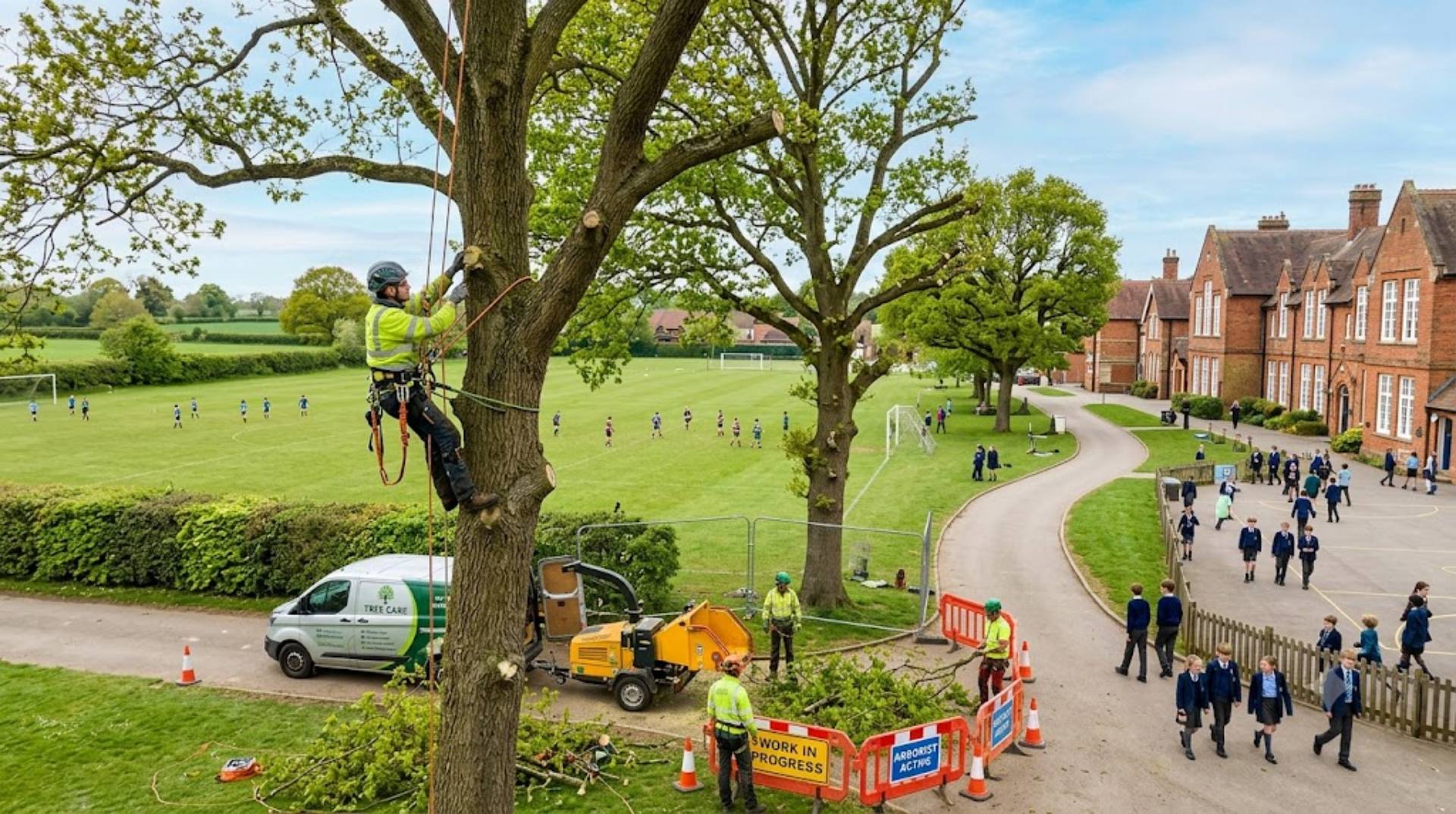
Trees are an essential part of the school environment. They provide shade, cooling when the weather gets hot, and beauty. They can also be a liability if they are damaged in storms. They could potentially pose a safety risk or damage buildings in some circumstances.
Head teachers, governors, and facilities managers therefore need to implement proper tree management for schools. Failing to do so could increase liability and lead to severe health and safety issues.
Understanding the legal landscape
Under UK law, school leadership has a statutory duty of care. This means that schools must take reasonable steps to minimise the risk of injury on their premises, specifically under the Health and Safety at Work Act 1974 and the Occupiers’ Liability Acts 1957 and 1984.
Branches falling in the playground and injuring children or staff can lead to investigations by the Health and Safety Executive (HSE). If schools cannot show that they have a record of compliance regarding tree care, they may face severe financial penalties and reputational damage.
The need to shift to proactive care
Schools need to shift to proactive care instead of waiting for trees to fall and branches to be damaged. They need to take action immediately, especially if trees could pose a risk to buildings or pedestrians. Here are some of the things you can do:
- Establish an inventory of trees on the property and their current condition.
- Zone school grounds by area, highlighting regions with overhanging tree cover.
- Prune seasonally using skilled arborists to remove damaged branches, and remove whole trees if necessary, particularly after winter storms.
Implement a professional framework
Assessing the structure of a tree is challenging, and it is not something that you should do internally as a school unless you have a caretaker with specific tree care-related accreditations.
Ideally, you should hire a specialist with knowledge of the forms that decay, fungal infections, and root compromise take. Partner with a qualified arborist to mitigate these risks. Make sure they provide you with detailed reports of the existing problems on your site so you can take proactive action immediately to remedy them. This way, you can prove to investigators in the future that you did indeed take action if there is tree-related damage or an injury on your premises.
Planning for the future
Of course, while all this is happening, you also want to plan adequately for the future. Trees will inevitably age and die, so it is a good idea to monitor every single tree on your site. You should have a strategy in place for when you will fell a tree and perhaps replace it with a new sapling.
Be particularly careful when planting trees that drop slippery, heavy fruits. These can increase slip, trip, and fall risks on walkways and pavements.
What to do?
Trees are part of your school’s living ecosystem. As such, they require perhaps the same or even more maintenance than your boiler system or alarms. Working with a professional arborist can reduce your risks and protect your budgets against unexpected tree-related emergency costs.